Best Biological Filter Media for Healthy Aquariums
Biological filter media provide a home for beneficial bacteria that break down ammonia and nitrite, safeguarding fish and plant health. The right media fits your tank size, filtration system, and bioload while maximizing surface area and water flow. This guide highlights five leading options commonly used by hobbyists to build robust biological filtration. Each item combines different materials and structures to boost bacterial colonization and extend filter life. Use the accompanying buying guide to compare media types and choose the best match for your aquarium setup.
| Product | Brand | Type | Capacity | Notable Benefit |
|---|---|---|---|---|
| Fluval BioMax Biological Media | Fluval | Ceramic media | 500 g | Premium-grade media that reduces ammonia and nitrates |
| Fluval BIO-FX Biological Filter Media | Fluval | Ceramic bio-media | 5 Liters | Deep pore structure for high biological surface area |
| Segarty 12 in 1 Bio Media | Segarty | Mixed media | 1.1 lb | Diverse media types for broad filtration spectrum |
| GOLDEAL Bio Balls Ceramic Rings Set | GOLDEAL | Ceramic bio balls and rings | 2.2 lb | Multiple media varieties foster robust bacterial colonies |
| EHEIM Substrat Pro | EHEIM | Sintered glass | 1 L | High porosity and long life with reusability |
When selecting biological media, consider tank size, bioload, and filter type. Ceramic media typically offers abundant surface area for bacteria and is reusable with proper rinsing. Mixed-media products combine several filtration mechanisms, potentially reducing the number of different media you need. Sintered glass media delivers excellent longevity and stability, especially in heavily stocked setups. The best choice often depends on whether your goal is to maximize bacterial colonization, maintain water chemistry, or simplify maintenance while delivering reliable filtration.
Fluval BioMax Biological Media
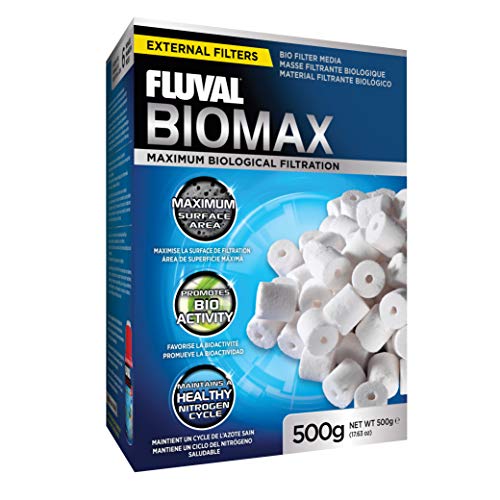
Fluval BioMax is a premium ceramic bio-media designed for Fluval filters. Its highly porous surface creates an expansive habitat for beneficial bacteria, supporting robust biological filtration throughout the aquarium. Compatible with Fluval Filter Series 106, 206, 306, 406, FX5, FX6, and several other Fluval models, BioMax fits standard media trays and baskets with ease. The media’s porous design encourages strong ammonia and nitrate reduction, contributing to clearer water and a stable nitrogen cycle. Use BioMax as a primary biological component alongside mechanical media to balance filtration in most canister and hang-on filters.
The BioMax design promotes extended contact time as water moves through the media, enhancing bacterial adherence without requiring specialized flow rates. For best results, rinse BioMax before first use and place it in the filter’s biological section with other filter media. Routine maintenance includes gentle rinsing in aquarium water to remove dust without dislodging established biofilms. This media is well-suited for both freshwater and planted aquariums where stable nitrogen levels support healthy fish and plant growth.
Fluval BIO-FX Biological Filter Media

Fluval BIO-FX is a biological filter media crafted from inert ceramic material that does not alter water chemistry. It features a deep pore structure with interconnected micro-tunnels that provide a vast surface area for beneficial bacteria to colonize. Linked cavities allow free and even water flow, discouraging blockages and prolonging contact time to improve overall biological filtration. This makes BIO-FX well-suited for mid- to large-capacity aquariums using Fluval canister filters, but it also adapts to many compatible filter systems.
As a dedicated biological media, BIO-FX complements mechanical media by increasing the habitat available for nitrifying and denitrifying bacteria. In practice, it can help stabilize ammonia and nitrite swings during stocking changes or nitrate accumulation over time. For optimal results, place BIO-FX as the main bio-media in the filter and monitor ammonia and nitrite levels during early use. Periodic checkups ensure the media remains unblocked and maintains adequate flow for filtration efficiency.
Segarty 12 In 1 Bio Media

Segarty’s 12 in 1 Bio Media delivers a diverse mix of filtration media in one package. The assortment includes ceramic rings, biological beads, activated carbon, Maifan stone, infrared breathing rings, infrared bacterial rings, volcanic rock, green zeolite, nanosphere, biosphere, gray mineral rings, and infrared bacterial balls. This variety provides multiple filtration mechanisms—biofiltration, adsorption, and mineral balancing—accommodating different water conditions and bioload levels. The media are porous, fostering beneficial bacteria while offering a broad spectrum of filtration effects in a single kit.
The package includes a mesh bag with a smooth zipper, making removal and cleaning straightforward. Activated carbon is packaged separately to preserve adsorption efficiency until you’re ready to use it. The Segarty media are designed for easy installation in many filters and ponds, allowing hobbyists to upgrade filtration without purchasing multiple separate media types. Before use, rinsing is recommended to remove dust and debris from transportation. This combination is especially appealing for hobbyists seeking a one-stop solution for diverse filtration needs.
GOLDEAL Bio Balls Ceramic Rings Set

GOLDEAL’s Bio Balls Ceramic Rings Set provides a robust mix of media designed to support biological filtration. The kit includes various media types such as volcanic rocks, medical stone, zeolite, coral sand, nanometer bacterial rings, infrared rings, activated carbon, and ceramic rings. This diversity fosters a wide range of beneficial bacteria while promoting water purification through multiple mechanisms, including physical filtration, chemical adsorption, and biofiltration. The ceramic components deliver a high surface area conducive to bacterial colonies and stable ammonia/nitrate cycling in freshwater and can be adapted to ponds and koi setups as well.
Placed in a media bag or canister tray, these bio balls and rings create ample surface area for colonization and water contact. The variety helps address different water quality challenges, including odor, discoloration, and nitrate buildup. Because media types differ in cleaning needs, it is advisable to rinse them gently and periodically inspect for clogging. The included mesh bag aids handling and keeps smaller pieces from dispersing in the filter system, contributing to easier maintenance and consistent filtration performance.
EHEIM Substrat Pro Biological Filter Media

EHEIM Substrat Pro is a sintered pearl-shaped glass media renowned for its high porosity and substantial surface area. Marketed for durability and longevity, this media offers a surface area of approximately 1800 square feet per gallon, supporting extensive bacterial colonization. Substrat Pro can be reused by lightly rinsing with aquarium water every one to three months and replaced every three to six months as part of a long-term filtration strategy. Its glass composition ensures chemical stability and minimal effect on water parameters, making it suitable for various freshwater setups and planted tanks.
The media’s porosity enables excellent water flow and reduced risk of clogging when paired with appropriate filter best practices. Because it is reusable, Substrat Pro supports cost-efficient filtration over time, reducing the need for frequent media replacement. In practical terms, it works well in canister filters and larger hang-on systems where a durable, high-surface-area bio-media is desirable. Regular rinsing—rather than full replacement—helps maintain bacterial populations and filtration efficiency between maintenance cycles.
Buying Guide
Choosing the right biological filter media depends on tank size, bioload, and filter configuration. Here are key purchase considerations to help you compare options and select the best fit for your setup.
- Tank size and bioload: Larger tanks with higher fish load benefit from media with high surface area and robust flow. Media like BIO-FX and Substrat Pro are well-suited to bigger systems, while smaller tanks can still benefit from compact ceramic media such as BioMax.
- Media type and diversity: Pure ceramic media focuses on biofiltration, while mixed media (like Segarty and GOLDEAL kits) provide multiple filtration mechanisms. Decide whether you prefer a single media focus or a combination approach.
- Flow and compatibility: Ensure the media type is compatible with your filter model. Some media are designed for Fluval canister systems, others for canister or internal filters. Adequate flow helps keep water moving through the media, maximizing contact time for bacteria.
- Surface area and porosity: More surface area generally means more bacteria can colonize. Deep pore structures and interconnected channels support stable biological filtration, especially at varying flow rates.
- Longevity and maintenance: Sintered glass (Substrat Pro) and ceramic media can last longer with proper rinsing, reducing replacement frequency. Reusability lowers ongoing costs and stabilizes filtration.
- Water chemistry and safety: Most media are inert and do not alter pH or hardness when properly rinsed. If a media includes carbon or zeolite, consider how adsorption may affect current filtration goals.
- Maintenance routine: Plan for periodic rinsing in aquarium water to preserve beneficial bacteria while removing debris. Avoid using tap water, which can kill beneficial bacteria.
- Cost and availability: Some media come in larger volumes (e.g., 5 L BIO-FX) and may offer better value per gallon. Compare upfront cost with long-term maintenance to determine the best choice.
- Aquarium goals: For planted tanks or reef setups, choose media that supports stable nitrogen cycles without introducing unwanted chemicals. For fry tanks or heavily stocked displays, prioritize media with high contact time and flow efficiency.
Across these five options, the best choice often balances surface area, flow compatibility, and maintenance practicality. Consider a combination approach if your filter space allows, using a primary bio-media such as Ceramic Rings or Sintered Glass in tandem with a supplementary media for adsorption or chemical filtration. Always follow manufacturer recommendations for maximum media capacity within your filter to prevent flow restrictions. Regular testing of ammonia, nitrite, and nitrate will help determine whether the chosen media meets the system’s needs and how often maintenance should occur.