Best Chew Toys for Birds: Safe Foraging and Beak Exercise
If you own a parrot, budgie, cockatiel, or another small to mid-sized bird, safe chew toys are essential for mental stimulation, physical exercise, and beak health. This article guides you through top chew toy options designed to engage foraging instincts, reduce boredom, and support healthy chewing. Each pick below features natural materials, safe textures, and engaging designs your bird can safely explore.
| Product | Brand | Key Benefit |
|---|---|---|
| Foraging Toys Parakeet Chewing Hanging Toy | lovyoCoCo | Foraging, shredding, rope perch |
| Kyouki Bird Toys Parrot Foraging Box | Kyouki | Natural materials, varied textures |
| LWINGFLYER 4 Pack Small Parrot Chew Toys | LWINGFLYER | Cardboard shredding, hanging fun |
| Bird Toys Conure Foraging Shredder 24 Pcs | lovyoCoCo | Multiple textures, enrichment |
| Bissap Bird Chew Toys 7 Packs | Bissap | assorted wooden and natural materials |
Foraging Toys Parakeet Chewing Hanging Toy

The toy is designed with natural loofah, rattan balls, and wood, stuffed with colorful crinkly papers. It supports safe chewing and hides treats for foraging fun. Hand-woven construction adds a tactile dimension that keeps birds engaged and encourages natural chewing instincts.
Key benefits include physical activity and mental stimulation, as birds pull out the crinkly papers for rewards. A cotton rope perch component lets you position the toy at different angles to create varied perching experiences in the cage.
Kyouki Bird Toys Parrot Foraging Box

Made from eco-friendly, pet-safe pine cones, apple wood, coconut shells, sola fibers, and loofahs, these toys avoid metals, plastics, or paints. The variety of textures and shapes fosters natural foraging behavior, chewing, and shredding, while offering mental stimulation and physical activity.
Possible play patterns include discovering hidden treats inside components and manipulating the foraging box to reach them. The design targets curiosity and dexterity, providing long-lasting engagement for a curious bird.
LWINGFLYER 4 Pack Small Parrot Chew Toys

These small shredding toys use natural corrugated cardboard, designed for tiny beaks to tear. The set includes multiple layers and a metal hook for easy hanging, enabling you to rotate configurations to maintain bird interest. Materials are chosen for safe chewing and minimal risk of ingestion.
With a focus on small birds such as budgies and lovebirds, the toys provide a productive outlet for beak maintenance, exercise, and enrichment as part of a complete cage setup.
Bird Toys Conure Foraging Shredder 24 Pcs

LovyoCoCo’s set features 24 bagel-style chew rings crafted from compressed cardboard, palm, and corn husk fibers. The variety in color and texture promotes foraging and shredding behaviors while helping exercise beak muscles and foot dexterity.
The design aims to alleviate boredom and stimulate natural behaviors including hanging, swinging, and climbing, contributing to overall well-being for small to mid-sized parrots.
Bissap Bird Chew Toys 7 Packs

This 7-pack features natural wooden blocks, loofah, corn husks, and other safe materials. The assortment supports climbing, chewing, and perching while avoiding additives or plastics. Birds can jump between toys to exercise and stay engaged for long periods.
Having multiple textures and shapes available helps address different beak strengths and preferences, preventing boredom and encouraging daily activity in the cage environment.
Wesco Pet Original Bird Kabob Shreddable Toy

The Bird Kabob is designed to satisfy chewing urges with soft fibrous wood fibers. The shredded, biodegradable composition offers a safe shredding experience that appeals to beak health while supporting daily activity and entertainment in a cage.
Bird Toys Rope Perch With Bell
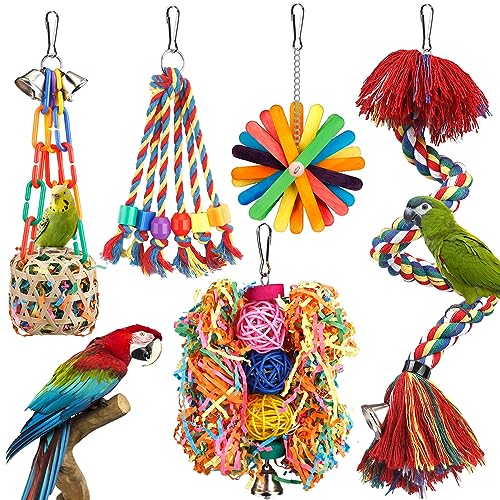
This colorful set includes five vibrant chew toys with foraging and shredding elements. Rattan balls, popsicle sticks, and plastic beads provide varied textures, while the rope perch and hanging design promote dynamic movement and exploration.
Designed for multiple small to mid-sized parrots, the toys encourage beak workouts and problem-solving as birds search for treats hidden within components.
Buying Guide: Key Purchase Considerations
- Materials: Look for natural, non-toxic components such as wood, loofah, pine cones, palm fibers, and wicker. Avoid toys with unknown dyes, paints, or metals that could pose ingestion risks.
- Foraging Value: Toys that hide treats or integrate shredding and nesting activities tend to promote problem-solving and keep birds mentally engaged longer.
- Beak Health: Regular shredding and chewing helps maintain beak sharpness and reduces stress-related behaviors. Choose toys that offer varied textures to target different beak areas.
- Size and Fit: Ensure the toy dimensions suit your bird’s species and cage. Too-large toys can restrict movement; too-small toys may be easily swallowed or discarded.
- Maintenance: Prefer toys that are easy to clean or replace. Some items may require periodic rotation to sustain interest and prevent boredom.
- Rotation Strategy: Introduce 2–3 new toys every couple of weeks. Rotate existing toys to create fresh stimuli and extended engagement.
- Safety: Inspect toys regularly for loose parts, frayed fibers, or swallowed pieces. Remove damaged toys promptly to avoid injury.
- Variety vs. predictability: A mix of shredding, foraging, and climbing toys addresses different behavioral needs and prevents routine fatigue.
In selecting chew toys for birds, prioritize options that balance safety, enrichment, and durability. The products listed above cover a range of materials, textures, and foraging styles to accommodate different preferences and bird sizes. Always supervise initial play to ensure safe interaction and adjust based on your bird’s response and activity level.