Choosing the right containment system helps keep your dog safely within your yard while giving them freedom to explore. Modern options range from wireless and in-ground setups to GPS-based fences, each with their own strengths. The following selections cover a spectrum of yard sizes, dog temperaments, and installation preferences, helping American dog owners compare features, training modes, and durability. This article highlights five top-rated systems and explains how to choose the best fit for your home and your canine companion.
| Product | Boundary / Coverage | Suitable For |
|---|---|---|
| PetSafe Wireless Containment System — Original | Up to 1/2 acre | Dogs 8 lb and up; neck 6–28 in |
| PetSafe Stay & Play Wireless Fence | Up to 3/4 acre | Dogs 5 lb and up; neck 6–28 in |
| PetSafe Basic In-Ground Fence | 1/3 acre initial; expandable to 5 acres | Dogs 6–26 in neck; all sizes within range |
| FOCUSER GPS Wireless Fence System | Radius 10–990 meters; up to 10 dogs | Dogs 10–110 lb; outdoor use |
| LINCAE GPS Wireless Fence | Radius 25–999 yards | Dogs 16+ lbs; outdoor use |
PetSafe Wireless Containment System — Original

The PetSafe Wireless Containment System — Original offers a compact, travel-friendly solution that requires no digging or installed wires. The circular boundary can cover up to a half acre, making it suitable for typical residential yards. Setup typically completes within 1–2 hours, and the system provides five adjustable correction levels, plus a tone-only training mode that helps shape behavior without constant aversive stimuli. Astatic-free reentry helps prevent sudden starts as your dog returns to the play area. The waterproof, rechargeable receiver collar is designed for dogs over eight pounds and necks from six to twenty-eight inches, ensuring a comfortable fit for many breeds.
Ideal for renters or homeowners who want a portable fence that can be reused in different locations. While it works well for many dogs, larger or irregularly shaped properties may benefit from a system with a larger boundary or alternative grounding method. Regular collar maintenance and charging help maintain consistent performance.
PetSafe Stay & Play Wireless Fence
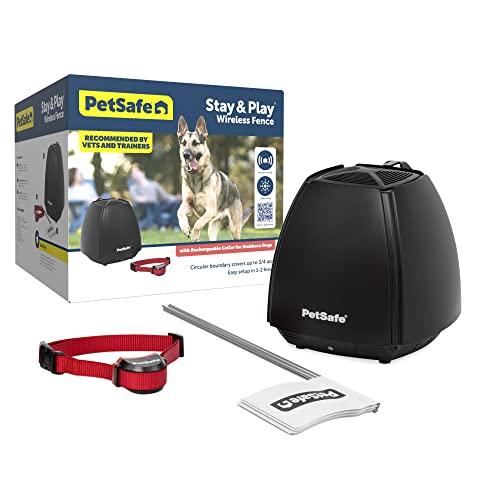
The PetSafe Stay & Play Wireless Fence provides a larger boundary suitable for medium to bigger yards, with a circular area that can reach up to three-quarters of an acre. Like the Original, it requires no digging and installs in about 1–2 hours. It offers five adjustable correction levels, a tone-only training mode, and static-free reentry to ease transitions for dogs adjusting to the system. The waterproof, rechargeable receiver collar fits dogs over six months old and at least five pounds, and supports neck sizes from six to twenty-eight inches. This model is well-suited for households with multi-dog families or larger outdoor spaces seeking more roaming room.
Users should consider the circular boundary’s fit to their yard geometry. The system excels in open spaces but may require furniture and landscape modifications for complex layouts. Regular training, proper collar fit, and charging routines contribute to optimal results.
PetSafe Basic In-Ground Fence
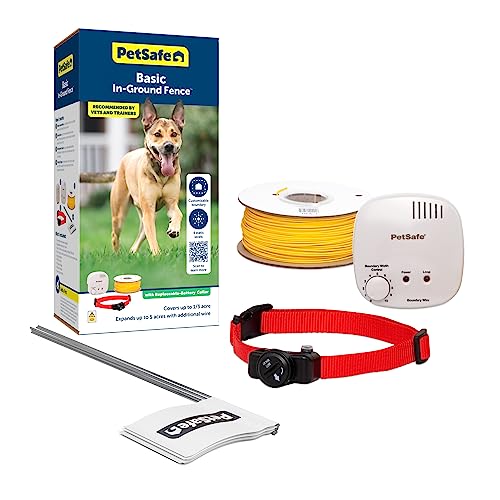
The PetSafe Basic In-Ground Fence introduces a customizable, in-ground option that lets you shape a boundary to fit your yard. The system includes 500 feet of wire and can be expanded to cover up to five acres with additional wire, offering substantial scalability for larger homes. It features four levels of static correction plus a tone-only option, enabling owners to tailor the training experience to their dog’s temperament. The kit is designed to keep dogs within a designated space while preserving the natural look of your yard, with safety at the forefront through adjustable correction and clear audible cues.
Because this is an underground system, initial installation is more involved than wireless options, requiring trenching for the wire and careful layout planning. However, once installed, it provides a permanent, invisible boundary that can be efficiently expanded as your family grows or moves. Proper training and consistent supervision enhance effectiveness.
FOCUSER GPS Wireless Fence System

The FOCUSER GPS Wireless Fence System represents a GPS-based approach to dog containment, eliminating buried wires altogether. It supports up to ten dogs and allows boundaries from 10 meters to 990 meters in radius. The system uses GPS technology to establish safe zones and offers training modes that include vibration and static shock, which can be activated when a dog approaches or crosses the boundary. The receiver collar is IP67-rated, meaning it is fully waterproof and suitable for wet grass, sprinklers, or rainy days, and it is rechargeable for ongoing use. This setup is ideal for larger properties or multi-dog households seeking scalable, wire-free containment.
GPS fences depend on satellite signals and may require calibration for precise boundaries in areas with signal interference. Training is essential to minimize overstimulation and maximize effectiveness. The system’s flexibility makes it a strong option for rurally expansive yards and seasonal landscapes where buried wiring would be impractical.
LINCAE GPS Wireless Fence

The LINCAE GPS Wireless Fence relies on GPS technology to establish a defined outdoor boundary and employs a three-tier warning system. With a radius adjustable from 25 to 999 yards, this system offers substantial coverage for larger yards and rural properties. The collar is IPX7 waterproof, designed to withstand rain and submersion in shallow water, and it supports dogs over 16 pounds. The GPS approach eliminates the need for wires, giving homeowners flexibility to move or resize zones as needed. The system’s primary appeal lies in its scalability for bigger properties and training versatility in outdoor environments.
As with other GPS-based options, performance depends on reliable satellite access and clear outdoor visibility. Users should plan for proper initial setup, including locating optimal signal reception and configuring appropriate warning levels for their dog’s temperament. Regular maintenance and firmware updates can help sustain accuracy and battery life.
Buying Guide
Key considerations when choosing a containment system
Understanding how boundary design, dog size, and yard layout influence performance helps you choose a system that aligns with your needs. Wireless technologies simplify setup and are ideal for renters or temporary installations, while in-ground fences provide permanent boundaries that blend into landscapes. GPS-based options offer scalable solutions for large properties or multiple dogs without buried wires. Battery life, water resistance, and collar fit are critical for daily use and overall effectiveness. Training features, such as tone cues and vibration or static modes, support humane behavior shaping and reduce frustration for pets and owners alike.
Yard size, shape, and boundary options
- Small to medium yards: Wireless systems can efficiently cover the space with minimal disruption.
- Large or irregularly shaped yards: In-ground fencing or GPS-based systems may provide more flexible containment without gaps.
- Expandable needs: If you anticipate growth or multiple pets, look for systems that support expansion (additional wire, more collars, or multi-dog GPS options).
Dog size, temperament, and comfort
- Collar weight and neck fit: Ensure the collar accommodates your dog’s neck dimensions and comfort needs.
- Correction levels: Five or more levels let you tailor stimulus intensity to your dog’s temperament.
- Training support: Tone cues and gradual correction are essential for effective, humane training.
Installation, maintenance, and reliability
- Wireless systems: Quick setup, but may be sensitive to hardware placement and interference.
- In-ground fences: Require more upfront installation but offer durable, permanent boundaries.
- GPS fences: Depend on satellite reception; weather and terrain can influence accuracy.
- Collar durability: Look for IP-rated waterproofing and rechargeable batteries for ongoing use.
Safety, legality, and best practices
- Follow manufacturer guidelines to set appropriate boundary distances and correction levels.
- Pair containment with training and positive reinforcement to foster good behavior.
- Regularly inspect equipment for wear, battery health, and clear signals to prevent false alarms.
Cost, value, and warranty considerations
- Balance upfront costs with the long-term benefits of reliability and ease of use.
- Check warranty terms and availability of replacement parts or collars.
- Consider the total cost of ownership, including wires, additional collars, and potential expansion kits.