Best Dog Splint for a Broken Leg Recovery
When a dog sustains a leg injury, a well-chosen splint or leg brace can support healing, reduce pain, and improve mobility during rehabilitation. This guide highlights top dog splints and braces designed for front or rear legs, with factors to consider when selecting the right option for your canine companion. Each pick focuses on stability, comfort, and ease of use for ongoing recovery at home.
Summary of selected products
| Product | Primary Use | Key Benefit |
|---|---|---|
| Labra Front Leg Brace | Front leg support | Compression and protection to prevent licking and soothe hotspots |
| OrthoVet Standard Rear Splint | Rear leg stabilization | Enhanced stability for hind leg recovery and mobility |
| OrthoVet Standard Front Leg Brace | Front leg stabilization | Post-surgery protection with ergonomic design |
| RHINO RESCUE First Aid Splint | Flexible, adjustable splint | Reusable, radiolucent, and easy to tailor to size |
| Petanims Front Leg Brace | Front leg support for hyperextension | Non-slip fit and breathable neoprene for extended wear |
Labra Front Leg Brace – Compression Wrap

The Labra Front Leg Brace uses a 3mm neoprene sleeve designed for front leg support with adjustable straps. It protects hotspots, lick granulomas, and pressure sores by offering targeted relief around sensitive skin areas. The wrap is breathable, durable, and intended to support joint health by easing weight-bearing strain, potentially aiding arthritis-related stiffness in older dogs. It emphasizes protection, comfort, and reliability for daily use during recovery.
Key features: 3mm neoprene construction; breathable and elastic; helps prevent licking and scratching; supports front leg joints; suitable for wound care and recovery scenarios. Consider for dogs needing targeted protection of the front leg while maintaining activity levels.
OrthoVet Standard Rear Splint

The OrthoVet Standard Rear Leg Splint provides essential support for dogs recovering from rear leg injuries, sprains, or arthritis. It is designed to stabilize weakened hind limbs, promote safe mobility, and aid in faster healing. Its ergonomic design covers from paw to mid-forearm, helping maintain a natural walking position while protecting vulnerable structures. This option prioritizes hind limb protection to support gradual rehabilitation and ongoing activity with less risk of compensatory strain.
Key features: enhanced rear leg stability; supports recovery from sprains, fractures, arthritis; ergonomic design extends to mid-forearm for natural gait. Consider for dogs needing rear leg stabilization without heavy restraints.
OrthoVet Front Leg Brace
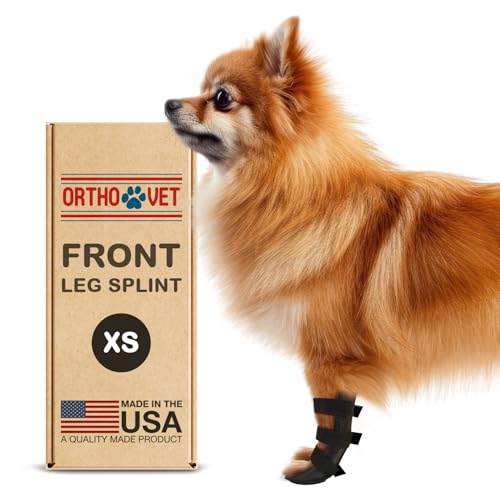
The OrthoVet Front Leg Brace focuses on stabilizing the front limb for injuries, arthritis, or post-surgical recovery. It provides joint support to regain mobility and protect the limb during rehabilitation. The ergonomic front-leg design extends from paw to mid-forearm, promoting a natural walking pattern while minimizing risks of knuckling or nerve issues. This option is well-suited for daily activity during recuperation and ongoing therapy sessions.
Key features: front-leg stabilization; post-surgery protection; ergonomic design for natural gait. Consider for dogs needing consistent front limb support during rehabilitation and daily activities.
RHINO RESCUE First Aid Splint

The RHINO RESCUE First Aid Splint is a lightweight, 36″ x 4.3″ splint designed to keep bones in position during treatment. Its aluminum core is sandwiched between closed-cell foam, providing robust support while remaining flexible enough to adapt to different limb sizes. The splint is waterproof, easy to clean, and radiolucent, allowing X-rays without removal. It is reusable and customizable by cutting with ordinary scissors, then remolding as needed.
Key features: aluminum core with foam insulation; waterproof and easy to disinfect; radiolucent for X-rays; adjustable and reusable for multiple injuries. Consider for flexible, long-term splinting and easy resizing in emergencies and home care.
Petanims Front Leg Brace
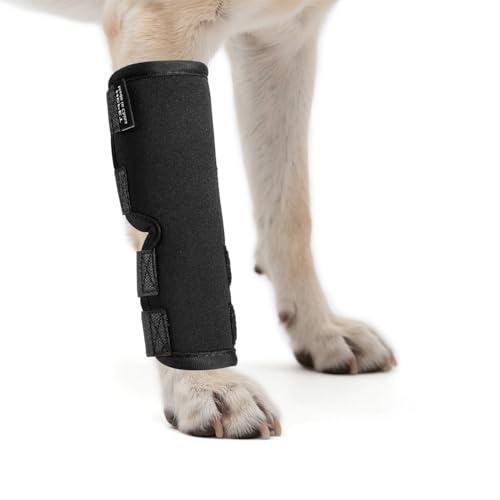
The Petanims Front Leg Brace targets hyperextension and wrist stabilization for recovery from sprains and arthritis. It features an adjustable non-slip, breathable neoprene wrap with reliable anti-slip straps to secure above the paw, reducing slippage during activity. The wrap is designed to stay in place while allowing natural movement, making it suitable for both daily wear and short walks during rehabilitation.
Key features: adjustable non-slip fit; breathable neoprene; designed for left or right forelimbs; targeted carpal and wrist stabilization. Consider for dogs needing reliable front-leg support with controlled movement during activity.
Buying Guide: Key Purchase Considerations
When choosing a dog splint or brace for a broken leg or recovery, consider the following factors to match your dog’s needs:
- Injury location and type: Front-leg versus rear-leg supports respond to different stabilization requirements. For injuries near the carpus or ankle, targeted carpal support is important.
- Fit and adjustability: Look for products with adjustable straps or wrap lengths and size guidance based on circumference or height. A secure, comfortable fit prevents rubbing and slipping.
- Material and comfort: Breathable neoprene or soft foam linings reduce heat build-up and chafing. Inspect for that soft-touch interior and skin-friendly edges.
- Mobility vs. immobilization balance: Rigid splints offer more protection but may hinder movement; flexible or semi-rigid designs can support healing while preserving natural gait.
- Durability and washability: Removable or washable covers simplify maintenance, especially if wound care is involved.
- Ease of application: Consider how easy it is for caregivers to fit the device correctly, especially if frequent redressings are needed.
- Radiolucency and veterinary coordination: Some splints are radiolucent for X-rays, aiding ongoing assessment without removal.
- Evidence of use: Look for products with user reviews or veterinary guidance indicating effectiveness for leg injuries, arthritis, or post-surgical recovery.
Comparative considerations
- Rear vs. front leg devices: Rear-leg splints emphasize hind limb stability, while front-leg braces prioritize carpal support and gait protection.
- Structure: Rigid splints (e.g., metal splints or semi-rigid wraps) offer strong immobilization, whereas flexible braces provide more natural movement with unilateral stabilization.
- Maintenance: Waterproof and easy-to-clean designs reduce infection risk when wounds are present and facilitate daily care routines.
In selecting the best option, consult with a veterinarian to confirm the appropriateness of a splint or brace for your dog’s specific condition and recovery plan. The right device should stabilize the limb, minimize irritation, and support comfortable, gradual return to normal activity.