Best Electric Pet Fence Solutions for Safe, Invisible Containment
Choosing an electric pet fence means balancing boundaries, training, and convenience. Wireless systems offer quick setups and circular play areas, while in-ground kits deliver custom shapes for irregular yards. GPS-enforced fences provide large, boundary-like control without physical wires, though require outdoor use and dependable satellite signals. This guide highlights five top options, spanning wireless, in-ground, and GPS boundaries, to help American pet owners select a safe containment solution that fits their yard size, dog temperament, and training goals.
| Product | Boundary Type | Approximate Coverage | Notable Feature |
|---|---|---|---|
| PetSafe Stay & Play Wireless Fence | Wireless | Up to 3/4 acre | Circular boundary with tone and 5 correction levels |
| PetSafe Original Wireless Fence | Wireless | Up to 1/2 acre | Lightweight, portable system with adjustable collar |
| PetSafe Stubborn Dog In-Ground Fence | In-Ground | Up to 1/3 acre | Custom-shaped boundary with 500 ft wire |
| LINCAE GPS Wireless Dog Fence | GPS | Radius 25–999 yards (outdoor only) | Three warning modes with IPX7 waterproof collar |
| VOISTINO GPS Wireless Dog Fence | GPS | Radius up to 1000 yards (large spaces) | 3 warning modes, IPX7 waterproof |
PetSafe Stay & Play Wireless Fence
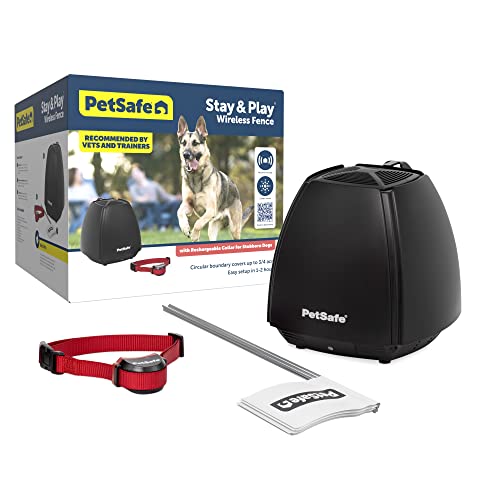
The Stay & Play system provides wireless freedom with a lightweight setup that typically takes 1–2 hours. It creates a circular boundary covering up to 3/4 acre, with no digging required. The collar offers 5 adjustable correction levels and a tone-only training mode, plus static-free reentry to ease transitions when your dog returns to the yard. The waterproof, rechargeable receiver collar fits dogs weighing at least 5 pounds with neck sizes from 6 to 28 inches, making it suitable for a wide range of small-to-medium dogs. This solution is especially convenient for temporary yard layouts or renters who cannot alter landscaping.
Homeowners should note that performance depends on weather and yard layout. For dogs that are easily overstimulated, starting at the lowest correction level and pairing with positive reinforcement improves training outcomes. Because it is circular, large angular yards may require repositioning or supplemental boundary planning. This system excels for quick setups, portability, and lightweight operation, offering reliable containment without trenching or heavy installation.
PetSafe Original Wireless Fence
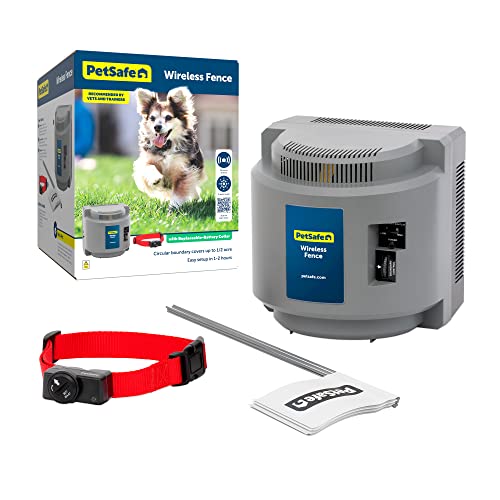
The Original PetSafe Wireless Pet Containment System offers a simple travel-friendly option that builds a circular boundary up to 1/2 acre. It requires no digging, making it ideal for homes with limited landscaping or renters. Like other wireless units, it provides 5 levels of correction and a tone-only mode to reinforce training without unnecessary discomfort. The collar is waterproof and rechargeable, designed to fit dogs older than 6 months and weighing at least 8 pounds, with neck sizes from 6 to 28 inches. This model prioritizes ease of use and immediate, dependable containment.
For households new to electronic boundaries, the Original Wireless Fence provides a straightforward transition from a leash to a fenced space. It can be especially beneficial for smaller yards or temporary setups where in-ground wiring would be impractical. As with all wireless fences, consistent training, clear expectations, and positive reinforcement enhance long-term success.
PetSafe Stubborn Dog In-Ground Fence

The Stubborn Dog In-Ground Fence provides a customizable boundary with up to 1/3 acre coverage, using 500 feet of 20-gauge wire for tailored shapes around your yard. It is designed for two-person weekend installation, allowing you to lay out a fencing boundary that matches irregular landscaping. The collar is waterproof and adjustable, offering a tone and vibration mode along with 4 levels of safe static correction to suit your dog’s temperament. The receiver supports dogs more than 6 months old and weighing at least 8 pounds, with neck sizes from 6 to 28 inches, making it a flexible choice for stubborn or large-dog households.
This option emphasizes the enduring reliability of in-ground systems for precise boundaries. While setup takes more time than wireless options, its customizability makes it suitable for larger or uniquely shaped yards. Training and consistency remain essential to ensure dogs learn to respond to the collar’s warnings before receiving any corrective stimulation.
LINCAE GPS Wireless Dog Fence

The LINCAE GPS Wireless Dog Fence uses GPS technology to define boundaries rather than physical wires. It supports a boundary radius from 25 to 999 yards and is designed specifically for outdoor use. The system includes three warning modes and an IPX7 waterproof collar, making it suitable for dogs older than 16 pounds who enjoy open-air play. A key note is that GPS fencing relies on reliable satellite signals; performance can be influenced by dense foliage, tall buildings, or complex terrain. The collar is rechargeable, providing a wire-free setup with a focus on outdoor freedom and safety.
GPS fences like this offer excellent coverage for expansive properties, seasonal yards, or farms where installing physical wiring would be impractical. They provide a scalable solution that adjusts to larger spaces, though users should plan for the potential need to recalibrate when moving locations. Training remains important to ensure your dog understands the boundary cues delivered by the collar’s warnings.
VOISTINO GPS Wireless Dog Fence
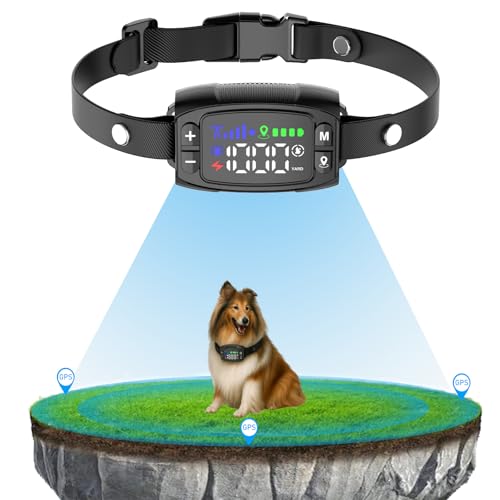
VOISTINO’s GPS Wireless Dog Fence emphasizes smart boundary positioning with three warning modes and a large adjustable range from 33 to 1000 yards, covering up to 761 acres in some configurations. The IPX7 waterproof collar supports dogs over 20 pounds, making it a practical option for dogs that frequently swim or play in wet environments. The system is designed for outdoor use with autonomous center-point memory, so settings persist between locations, reducing setup time after relocation. GPS containment is particularly attractive for large properties seeking flexible, wire-free boundaries.
In choosing between GPS-based options, consider terrain, tree cover, and outdoor activity patterns. GPS boundaries can offer expansive, flexible containment but may require occasional recalibration if the dog frequently changes positions within a large space. For active or swimming dogs, IPX7-rated collars help ensure resilience against rain, splashes, and muddy play.
Buying Guide
Key purchase considerations help align a fence system with your yard, dog, and training approach. The following perspectives cover common scenarios and trade-offs to help you decide the best fit.
- Fence Type and Setup: Wireless fences are fastest to set up, ideal for smaller yards or renters. In-ground systems deliver customized boundaries for irregular spaces but require more time and some landscaping work. GPS fences remove wires entirely and work best for large outdoor areas, though accuracy depends on satellite signals and outdoor conditions.
- Dog Size and Temperament: Check weight and neck measurements to ensure the collar fits comfortably. Some dogs respond better to tone-only training, while others benefit from static correction at adjustable levels. For sensitive dogs, start at the lowest level and pair with positive training cues.
- Boundary Coverage: Measure your yard to determine the appropriate boundary type. Wireless options suit confined spaces, while in-ground or GPS systems accommodate larger or uniquely shaped lots. If your yard has fences or pools, ensure the boundary keeps dogs away from hazards.
- Training Support: Look for systems with a tone feature and multiple correction levels. A gradual training plan improves long-term success and reduces stress for both pet and owner.
- Durability and Weather Resistance: Weatherproof collars and IPX7 or better ratings reduce maintenance needs in rain or mud. Battery life and charging accessibility are practical considerations for daily use.
- Maintenance and Replacement Parts: Investigate availability of replacement batteries, wires, and transmitters. In-ground systems require occasional wire checks, while GPS collars may need software updates or recalibration over time.
- Safety and Comfort: Ensure the collar design minimizes skin irritation and offers safe reentry or tone cues to prevent confusion. Avoid aggressive stimulation settings and discontinue use if your dog shows signs of distress.
- Value and Longevity: Consider how much yard growth or moves you anticipate. A system with scalable coverage or easy reconfiguration can save time and money over the long term.
Overall, the best electric pet fence for your household balances boundary accuracy, ease of installation, and your dog’s training needs. For smaller or rental settings, wireless models offer swift setup and portability. For yards with irregular shapes or significant landscaping, in-ground systems provide precise customization. For owners with expansive outdoor spaces, GPS-based fences offer scalable, wire-free containment with growing compatibility across property types.