Best Foods for Pugs: Healthy Diet Picks for Small Breeds
Choosing the right food for pugs involves balancing taste, digestibility, and nutrient content to support their distinctive brachycephalic physiology. This guide highlights top dog foods tailored for pugs, including breed-specific formulas and small-breed options designed to fit their short muzzle and energetic disposition. Each profile draws on common pug needs such as coat health, digestion, and appropriate calorie intake, helping owners compare options in one place.
| Brand | Product | Type | Target |
|---|---|---|---|
| ROYAL CANIN | Pug Adult Dry Dog Food | Dry Food | Adult Pugs |
| ROYAL CANIN | Pug Puppy Dry Dog Food | Dry Food | Pug Puppies |
| Nature’s Recipe | Grain Free Small Breed Chicken, Sweet Potato & Pumpkin | Dry Food | Small Breed Adults |
| Optimeal | Small Breed Lamb & Rice | Dry Food | Small Dogs |
| Natural Balance | Limited Ingredient Salmon & Sweet Potato | Dry Food | Small Breeds, Sensitive Pets |
Below are five carefully chosen products that cover different needs—from breed-focused nutrition and puppy development to limited-ingredient options for sensitive stomachs. Each entry includes a short overview, key features, and why it might be a good fit for a pug diet. Prices are not listed to keep comparisons straightforward.
Royal Canin Pug Adult Dry Dog Food
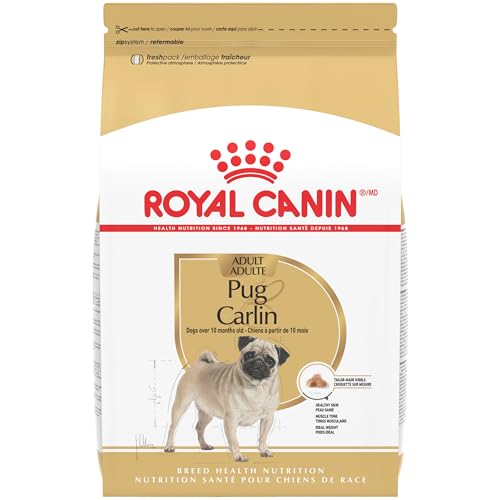
The Royal Canin Pug Adult formula is a breed-specific dry food designed for purebred pugs aged 10 months and older. It features a cloverleaf kibble shape that suits a pug’s short, square muzzle, promoting easier picking up and chewing. The formula also emphasizes skin and coat health with EPA and DHA sourced from fish oil, helping support a shiny coat and comfortable skin—common pug concerns. This option focuses on long-term adult nutrition aligned with breed characteristics.
Royal Canin Pug Puppy Dry Dog Food

This formulation is formulated for purebred Pug puppies from 8 weeks to 10 months old. It includes a specialized kibble design that helps small dogs easily pick up and chew their food, supporting transition to solid meals. The product also contains an antioxidant complex that contributes to immune development during the puppy stage, complementing a pug’s growth trajectory and tendency toward sensitive digestion if not fed an appropriate puppy formula.
Nature’s Recipe Grain Free Small Breed

Nature’s Recipe Grain Free Small Breed features real chicken as the first ingredient and grains-free formulation, making it suitable for small breed dogs with sensitive stomachs or grain sensitivities. The recipe supports adult dogs with added vitamins and minerals for maintenance. It’s especially appealing for pug owners seeking a natural, grain-free option that aligns with digestion-friendly ingredients while delivering protein for lean muscle maintenance.
Optimeal Small Breed Lamb & Rice

Optimeal Small Breed Lamb & Rice emphasizes fresh lamb as the first ingredient, offering highly digestible protein and a tasty flavor that many small dogs, including pugs, enjoy. The formula targets high energy needs in small breeds and includes grains that provide essential nutrients and carbohydrates for sustained vitality. It also focuses on digestive support with a blend designed for small dogs, aiming to balance energy with comfortable digestion.
Natural Balance Limited Ingredient
Small Breed Salmon & Sweet Potato

This product is a limited-ingredient dry food designed for small breeds and sensitive pets. Salmon serves as the single animal protein source, paired with sweet potatoes to provide digestible fiber and energy. It explicitly avoids added grain, soy, gluten, or artificial colors or flavors, making it a practical choice for pug owners monitoring potential food sensitivities or seeking a simpler ingredient list for their dog’s coat and skin health.
Buying Guide
Key considerations for choosing pug food
- Breed and life stage: Pugs have unique facial and dental structures. Look for kibble that’s easy to pick up and chew and formulas tailored to adults or puppies as appropriate.
- Digestive health: Pugs can be prone to weight gain and sensitive stomachs. Choose foods with balanced fiber blends, digestible protein, and prebiotics if available.
- Skin and coat support: Omega-3 and omega-6 fatty acids support coat shine and skin health, which are common pug concerns.
- Small-breed sizing: Smaller kibble helps with chewing efficiency and reduces the risk of gulping, which can cause digestion issues in small dogs.
- Allergies and sensitivities: If there are known food sensitivities, consider limited-ingredient or grain-free options with a single protein source.
- Calorie control: Pugs are prone to weight gain; monitor feeding guidelines and choose formulas with appropriate caloric density for small breeds.
Comparison of approaches
- Breed-specific formulas (Royal Canin) target pug anatomy and coat needs, offering tailored kibble shapes and nutrient profiles.
- Grain-free and limited-ingredient options (Nature’s Recipe, Natural Balance) aim to minimize potential digestive triggers while supporting skin and coat health.
- Puppy-specific formulas (Pug Puppy) support early development with antioxidants and specialized bite size, easing transition to solid foods.
- Proteins vary across options—chicken, lamb, beef, and salmon—allowing owners to rotate proteins to reduce allergy risk.
Practical feeding tips
- Introduce new foods gradually over 7–10 days to minimize stomach upset.
- Measure servings according to product guidelines and adjust based on activity and weight goals.
- Offer fresh water at all times and monitor for changes in appetite or stool regularity.
- Consult a veterinarian if your pug has persistent digestive issues, skin concerns, or weight management challenges.