Best Foot Brace for Knuckling Dogs: Top Picks for Gait Support and Mobility
If your dog knuckles or drags their feet, these foot brace options are designed to provide stability, improve paw positioning, and support healthier walking gaits. The top picks below are best for dogs with dropped foot, arthritis, nerve or spinal issues, or post-surgical rehabilitation. Each product highlights who it’s best for and why it was selected, with practical considerations to help you choose confidently.
Summary of chosen products
| Product | Best For | Key Benefit | Limitations |
|---|---|---|---|
| Idepet Drop Foot Brace Strap On | Small to medium dogs with arthritis or drooped paw issues | Sturdy sole, reflective straps, protective and stabilizing | May require size check for secure fit |
| YAQUHO No Knuckling Brace | Active dogs needing adjustable toe lift | Easy reel dial for custom toe elevation | Requires adjustment for different activities |
| HAGGEMI Strap-On Drop Foot Brace XL | Medium to large dogs needing reliable lift | Durable, adjustable straps with solid support | Size-specific fit needed |
| GFKRHPNY Rear Leg Support Brace | Dogs with rear-leg foot drop or toe dragging | Rear-leg oriented support for natural gait | Primarily rear-leg use |
| Generic M Strap-On Foot Brace | General use across sizes with knuckling | Adjustable straps and protective sole | Quality may vary by batch |
Idepet Drop Foot Brace Strap On

Best for dogs with dropped foot or arthritis who need added joint protection and stability. The design uses a sturdy sole and comfortable fabrics to support the paw while distributing pressure to ease pain. Reflective straps improve nighttime visibility for safety on walks. Suitable for outdoor use where paw protection is needed. Avoid this if your dog requires a more rigid orthotic solution and a perfect size fit is not confirmed.
YAQUHO No Knuckling Brace
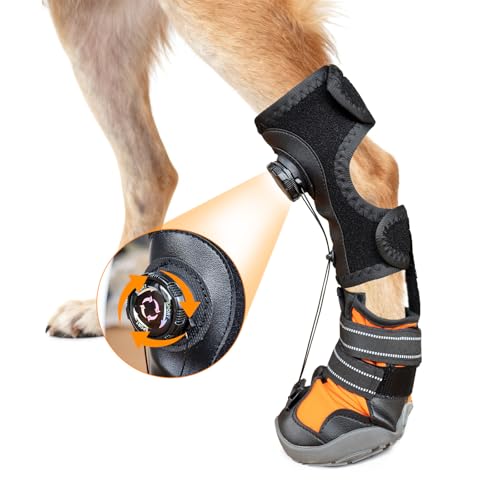
Best for dogs needing gentle toe lifting and adjustable support. The dial-driven reel allows precise toe elevation to promote a more natural paw placement during walking. Enhanced rubber outsole improves grip on varied surfaces and adds safety during low-light walks due to reflective laces. Choose this if you want a customizable toe lift; avoid if a more rigid boot is required or if your dog’s gait needs rear-leg emphasis.
HAGGEMI Drop Foot Brace XL

Best for medium to large dogs needing robust, adjustable support. The brace combines a high-tensile wire system with an adjustable knob, allowing quick fine-tuning of dorsiflexion to assist dogs with abnormal gait. It protects paws from worn pads and distributes pressure to ease arthritis or muscle-related discomfort. Use this if you need a durable, highly adjustable fit; it may be less suitable for very small dogs without proper sizing.
HAGGEMI Strap-On Drop Foot Brace XL (Alternate)
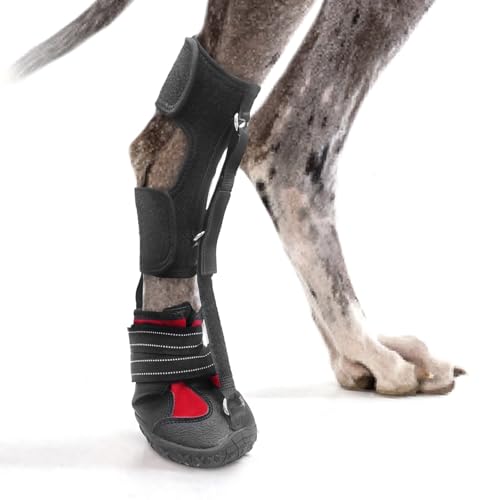
Best for dogs needing reliable, secure strap-on support with an emphasis on keeping the paw at a proper angle during walking. The adjustable straps ensure a custom fit that minimizes slippage. It’s a solid choice for dogs with long walking sessions, but ensure you measure accurately to avoid fit issues.
Generic Strap-On Drop Foot Brace M

Best for dogs needing essential support with a balance of mobility and protection. It features adjustable straps to fit contour and a protective, non-slip sole. It’s a practical option for ongoing use across various environments. Consider this if you want a budget-friendly, versatile brace; avoid if you require specialized orthopedic engineering beyond general support.
GFKRHPNY Rear Leg Support Brace

Best for dogs with rear-leg foot drop and toe-dragging issues. This brace focuses on hind limb support to promote a natural gait and assist during rehabilitation. It’s particularly useful post-surgery or for aging dogs with hind leg weakness. A limitation can be that it is designed for rear-leg use, so front-leg needs may require a separate solution.
Buying Guide: How To Choose The Right Foot Brace For Knuckling Dogs
- What type of knuckling issue do you have? Front-foot drop, toe dragging, or rear-leg weakness require different supports. Front-foot braces often focus on toe lift and dorsiflexion, while rear-leg braces emphasize gait alignment and limb stability.
- Size and fit matter. Carefully measure paw width, length, and leg circumference. Adjustable straps help, but a poor fit can cause slipping, rubbing, or reduced effectiveness.
- Activity level and environment. Choose a brace with traction shoes for slick floors and outdoor surfaces if your dog hikes or runs frequently. Reflective elements improve nighttime visibility.
- Material quality and comfort. Look for breathable fabrics, cushioned interiors, and a non-slip sole. Durable construction supports longer wear and reduces the risk of skin irritation.
- Ease of use and maintenance. Straps that are easy to adjust and clean will save time and encourage consistent use. Check for any parts that may wear with repeated use.
- Safety considerations. Ensure the brace does not restrict natural movement excessively and does not apply uncomfortable pressure on joints. Monitor your dog’s response and consult a veterinarian if wearing causes distress.
Common Questions About Foot Braces For Knuckling Dogs
- Do foot braces require a veterinarian’s recommendation? It’s wise to consult a veterinarian if your dog has a neurological condition or post-surgical needs to confirm suitability and fit.
- Can braces replace rehabilitation? Braces support mobility but should be part of a broader rehab plan that may include physical therapy and controlled exercises.
- How long should a dog wear a brace daily? Start with short sessions and gradually increase as comfort and fit allow, following veterinary guidance.
- Are braces effective for all dogs with knuckling? Effectiveness varies with cause, severity, and the dog’s tolerance. Some dogs benefit more from toe lift or rear-leg support than others.
- What maintenance is needed? Regularly inspect straps, soles, and fasteners for wear. Clean fabrics per manufacturer instructions to maintain hygiene and performance.
- How do I know if the brace fits correctly? Look for signs of rubbing, slipping, or overheating. A properly fitting brace stays in place without restricting movement while providing targeted support.