Choosing the right filter is essential for maintaining water quality, reducing maintenance, and supporting a healthy, thriving freshwater aquarium. The following picks balance filtration power, ease of use, and noise levels for American homes with tanks ranging from small setups to large community aquariums. Each option emphasizes clear water, reliable performance, and straightforward maintenance.
To help you compare quickly, the table below summarizes five top picks that fit common freshwater needs, from standard canister and power filters to specialty units for larger tanks and even turtle habitats. The list focuses on filters that deliver solid mechanical, chemical, and biological filtration, with features like visible dirt indicators, UV options, and quiet operation.
| Product | Tank Range (gal) | Flow (GPH) | Notable Features |
|---|---|---|---|
| TARARIUM 400GPH Fish Tank Filter | 75-200 | 400 | 3-stage filtration; transparent box; wave maker |
| 600GPH UV Aquarium Filter | 100-300 | 600 | UV sterilization; independent switch control |
| Marineland Penguin Bio-Wheel 200GPH | 20-55 | 200 | Bio-Wheel; multi-stage filtration; proven brand |
| TARARIUM Crystal 300GPH 4-in-1 Filter | 40-150 | 300 | 4-in-1 design; double deep filtration; quiet |
| TARARIUM 290GPH Turtle Tank Filter | 40-85 | 290 | Bottom suction; multifunctional; ceramic media |
TARARIUM 400GPH Fish Tank Filter

The TARARIUM 400GPH Fish Tank Filter is designed for larger freshwater systems, delivering robust three-stage filtration that supports clear water and healthier occupants. The unit’s mechanical, chemical, and biological media work together to reduce dissolved waste, odors, and particulates, resulting in fewer routine water changes without sacrificing water quality. A distinctive feature is the transparent filter box, which makes it easy to monitor the filter media and detect when cleaning is needed. The visible sponge helps aquarists gauge when maintenance is due, promoting proactive care.
With a 400 GPH pump, this filter moves water vigorously enough to prevent stagnation and improve gas exchange, which is especially helpful for moderately stocked community tanks. The manufacturer notes suitability for tanks in the 75–200 gallon range, making it a strong choice for mid-to-large aquariums that need reliable, continuous filtration and noticeable water clarity. Submersible installation simplifies setup and minimizes visible equipment, while media can be refreshed or replaced to suit your bioload and algae control goals.
Maintenance involves rinsing the sponges and changing any chemical media per schedule. Because the box shows when the sponge darkens with dirt, you can avoid unnecessary cleanings or media changes. For best results, pair with an appropriate biological media strategy to support beneficial bacteria and maintain a stable, healthy ecosystem for fish and invertebrates alike.
600GPH UV Aquarium Filter

The 600GPH UV Aquarium Filter is built for larger freshwater tanks, offering a comprehensive filtration solution with an integrated UV purification step. The UV component targets free-floating algae and some microorganisms, helping to clear green water and improve overall clarity in 100–300 gallon systems. The unit’s dual filtration approach—mechanical filtration combined with biological processes—strives to maintain a balanced environment while minimizing nuisance algae.
One notable feature is independent switch control for the UV lamp. This enables you to run filtration without UV exposure, which can be useful when algae control isn’t needed or when keeping sensitive species that may benefit from reduced light exposure. The filter is designed to operate with a strong pump to maintain water turnover, ensuring oxygenation and continuous circulation for larger or more active tanks. Regular maintenance includes cleaning the media and replacing UV components as recommended by the manufacturer to preserve efficacy.
For aquarists seeking a filter that also helps curb algae blooms in a larger setup, this model provides a convenient, all-in-one approach. It’s especially suitable for tanks where water clarity and quick response to water quality changes are priorities, while offering flexibility in how you use the UV feature.
Marineland Penguin Bio-Wheel 200GPH
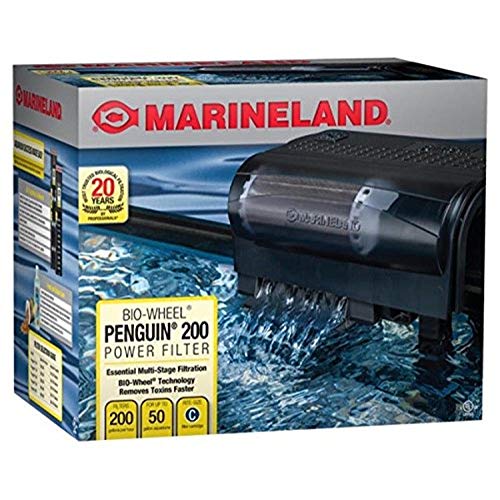
The Marineland Penguin Bio-Wheel Power Filter uses rotating Bio-Wheel technology to deliver effective wet/dry biological filtration, a hallmark of classic penguin-filter designs. This model provides multi-stage filtration to handle mechanical, chemical, and biological cleaning needs, helping maintain a clean aquatic environment with reliable performance. The rotating Bio-Wheel serves as a biological media surface, promoting beneficial bacteria growth that can rapidly process ammonia and nitrite into less harmful compounds.
Designed for smaller to mid-sized tanks, this filter balances power and simplicity. The unit is easy to install and maintain, with replaceable media that supports ongoing biological filtration. For hobbyists seeking a compact, proven solution with strong biological filtration alongside mechanical and chemical stages, the Penguin line remains a dependable choice. When paired with routine media changes and consistent aquarium maintenance, it can contribute to stable water chemistry and a healthier community of fish and plants.
Maintenance typically involves cleaning the intake and media baskets, replacing carbon or other chemical media as needed, and ensuring the Bio-Wheel remains unobstructed. Its user-friendly nature makes it suitable for beginners and seasoned aquarists alike who want reliable filtration in tanks around the 20–55 gallon range.
TARARIUM Crystal 300GPH 4-in-1 Filter

The TARARIUM Crystal 300GPH 4-in-1 Filter is marketed as an all-in-one solution for compact to mid-sized tanks. It combines water filtration with air pumping and wave-making capabilities, delivering a multi-functional approach suitable for hobbyists who want fewer individual devices in their tank. The 4-in-1 design integrates filtration, aeration, water movement, and circulation in a single unit, potentially simplifying maintenance and reducing clutter around the aquarium.
One highlighted feature is double deep filtration via a black biochemical sponge, designed to reduce odors and yellowing in the water by breaking down excrement and leftover food particles. The filter media are reusable after rinsing, supporting long-term cost savings. In terms of operation, the unit is described as quiet, with external silicone cushioning to minimize noise from vibration and water movement, making it a good choice for living spaces where keeping noise to a minimum matters.
To maximize performance, ensure proper placement in the tank and regular media maintenance. The product’s 40–150 gallon compatibility makes it appropriate for mid-sized community tanks, planted setups, or tanks with modest bioload where compact design and quiet operation are valued.
TARARIUM 290GPH Turtle Tank Filter

The TARARIUM 290GPH Turtle Tank Filter is designed for turtle habitats and other systems that require steady water circulation with reliable filtration. It supports freshwater setups in the 40–85 gallon range and features a bottom suction design that enhances circulation and helps remove waste from the tank bottom. The filter’s 290 GPH flow provides enough movement to prevent stagnation while remaining suitable for species that prefer gentler currents.
Filtration is built around a dual-stage approach that balances mechanical filtration with added biological media. The mesh sponge traps particulate matter, fish waste, and food debris, while ceramic bio-balls provide surface area for beneficial bacteria to help break down ammonia and nitrite. This combination promotes cleaner water and a healthier environment for turtles, fish, and other aquatic life. The bottom-suction design also helps reduce exposed equipment visually, which can be a consideration for more naturalistic tank aesthetics.
Maintenance involves cleaning the sponge and bio-media regularly and ensuring the suction intake remains clear of debris. The unit’s design supports straightforward installation in mid-sized turtle or mixed-species tanks, offering a practical option for hobbyists who need reliable, all-in-one filtration with easy upkeep.
Buying Guide
Several factors influence which freshwater filter is the best fit for your tank. Start by considering your tank size, bioload, and inhabitants. A higher flow rate is not always better; it must be matched to the fish and plants in your aquarium to avoid stressing sensitive species or blasting plants with too much water movement.
- Filtration types: Most filters combine mechanical, chemical, and biological filtration. Mechanical media trap debris; chemical media remove dissolved impurities; biological media support beneficial bacteria. For stable water chemistry, a healthy balance of all three stages is ideal.
- Flow rate and turnover: Aim for roughly 5–10 times the tank volume per hour for most setups. Larger, more dynamic tanks may benefit from higher turnover, while heavily planted or fish-friendly tanks may require gentler flow.
- Filter type and placement: Internal, hang-on-back, and canister filters each have pros and cons. Canisters often offer thorough filtration and media customization, but require space and longer setup. Internal and hang-on filters are typically easier to install but may offer less media capacity.
- UV sterilization: UV can help clear cloudy water and reduce some algae, but it is not a substitute for good maintenance. Consider UV options if algae control is a priority or if you have repeatedly cloudy or green water issues. Remember that UV lamps require regular replacement to remain effective.
- Noise and energy use: Quiet operation matters in living spaces. Look for models with cushioned mounts and sealed housings. Energy-efficient designs save ongoing costs for larger tanks.
- Media replacement and maintenance: Replacement media costs add up over time. Favor models with accessible, reusable media and clear maintenance schedules to manage ongoing expenses.
- Tank compatibility and inhabitants: Turtle tanks and heavily bioloaded systems may demand filters with stronger bottom suction, robust media, and easier access for cleaning. For planted tanks, be mindful of flow that could uproot delicate flora.
- Replacement parts and support: Choose brands with readily available replacement parts and good customer support. A filter with widely available media and parts reduces downtime when maintenance is needed.
In practice, a balanced approach often means pairing a capable primary filter with a small supplementary device for targeted tasks (such as a separate sponge for polishing or a small UV unit for algae control). When evaluating options, list your tank’s volume, your fish load, desired maintenance cadence, and any specific water quality concerns, such as nitrate buildup or algae growth. This helps you select a filter that delivers reliable performance while keeping maintenance manageable.