Shopping for a GPS fence dog collar can simplify keeping a spirited pet safe while expanding outdoor adventures. This guide highlights five top GPS-based containment systems, emphasizing range, safety modes, battery life, and app features. Each option below blends containment with training tools, helping owners tailor boundary settings for different yards, climates, and dog temperaments. The accompanying quick-reference table summarizes core specs to help you compare at a glance, followed by in-depth product sections that detail what makes each model suitable for various dog sizes and activity levels.
| Product | Brand | Range / Notes | Notable Feature |
|---|---|---|---|
| LOTYP 2-in-1 GPS Fence & Remote Training | LOTYP | GPS boundary 30 m to 990 m; up to 761 acres; remote range to 1000 ft; supports up to 3 collars | Hybrid containment and training in one system |
| LINCAE GPS Wireless Fence | LINCAE | Radius 25–999 yards; outdoor use only; IPX7 waterproof | High-sensitivity GPS with multiple warning modes |
| Aweec GPS Wireless Fence | Aweec | Boundary 65–3280 ft; supports up to 3 dogs; app-based control | Lifetime free app and 2-in-1 fence + trainer |
| Meowant GPS Wireless Fence System | Meowant | Areas 0.48–3,534 acres; Bluetooth tracking up to 98 ft | Free app with polygon or round shapes |
| SATELLAI GPS Fences | SATELLAI | 0.5–100,000 acres; AI analysis; IP68; five GNSS systems | AI-assisted real-time location planning |
LOTYP 2-in-1 GPS Fence System

LOTYP combines a GPS dog fence with a remote training collar, delivering a versatile containment solution for active dogs. In GPS Fence Mode, the boundary can be set from 30 meters up to 990 meters, covering a substantial area of up to 761 acres, which makes it suitable for large yards, fields, and communal spaces. The system also supports remote training with a range of up to 1,000 feet and offers three correction modes—Beep, Vibration, and Static Shock—across adjustable levels, allowing tailor-made training that aligns with a dog’s temperament and owner safety preferences.
It can train up to three GPS collars simultaneously and offers easy switching between GPS fence mode and remote training mode, enabling quick adaptation to indoor drills or outdoor hikes. The combination of containment and training in one device simplifies gear management for families that value portability and quick setup without trenching or permanent boundaries.
LINCAE GPS Wireless Fence

LINCAE employs GPS with intelligent scene recognition, delivering precise boundary placement while emphasizing energy efficiency for longer field use. The collar is designed for outdoor operation and is clearly intended for dogs over 16 pounds, with a boundary radius that ranges from 25 yards to 999 yards. The system emphasizes reliable reception by using high-sensitivity GPS to maintain a defined fence line even in challenging terrains, giving handlers confidence when their dog enjoys wide-open spaces.
Warning modes include tones when approaching the boundary, and if a dog crosses the line, the collar delivers tones, vibrations, and/or shocks with five adjustable levels, followed by a brief pause before repeating up to five cycles. The rechargeable battery and IPX7 waterproof rating ensure resilience during excursions through rain, mud, and shallow water.
Aweec GPS Wireless Fence
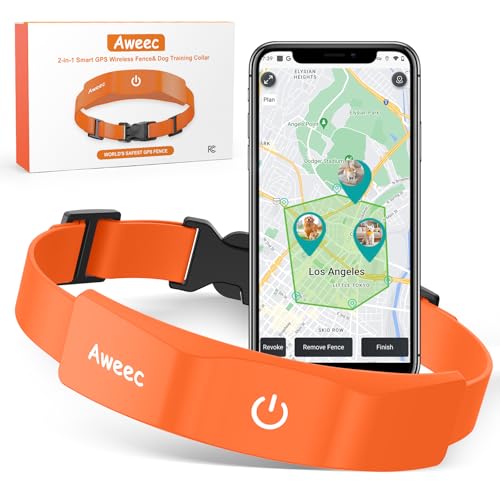
Aweec pairs a GPS fence with a training collar in a compact, user-friendly package. The system supports up to three dogs and provides a substantial boundary range from about 65 feet to 3,280 feet, enabling flexible play areas from backyards to larger fields. A dual-core GPS chipset helps reduce interference and conserve energy, improving reliability in varied environments. The accompanying app provides setup and monitoring tools, making it easier to adjust fences, track distances, and review training progress.
Rechargeable, weather-resistant, and designed for outdoor use, the Aweec system emphasizes stability and ease of use. Features include continuous remote control for training, real-time location updates, and a straightforward interface that supports adjusting radius and individual collar settings.
Meowant GPS Wireless Fence System

Meowant offers a versatile virtual fencing approach via a free app, allowing owners to draw custom fences without buried wires or monthly fees. Users can create round or polygonal shapes covering from 0.48 to 3,534 acres, making it suitable for varying yard sizes and property layouts. The system also provides Bluetooth proximity tracking within 98 feet, enabling quick checks on a dog’s location even when the phone isn’t in reach outdoors.
Equipped with a 2-in-1 design, Meowant combines virtual fencing with a remote trainer and offers four warning modes—beep, vibration, beep plus vibration, and customizable static stimulation—each with multiple intensity levels. In open areas, the remote trainer works up to about 1,640 feet, while the app provides additional control and training history for ongoing progress.
SATELLAI GPS Fence With AI

SATELLAI advances GPS fencing with AI analysis and flexible virtual boundaries. The collar supports precise positioning across 0.5 to 100,000 acres, enabling complex layouts such as nested or overlapping zones. Real-time AI assistance helps plan feeding, training, and safety routines, while dual-band GNSS and Mapbox maps improve accuracy across diverse environments. The system is designed for medium to large dogs and includes a waterproof, IP68-rated collar. A claimed five-day battery life supports long outdoor sessions and remote use.
With a broad range of boundary options, SATELLAI emphasizes AI-powered adjustments to maintain safety as property boundaries shift or expand. The combination of AI features, robust weather resistance, and extensive coverage makes it appropriate for large properties, rural settings, or scenarios requiring highly customized fencing layouts.
Buying Guide
Boundary Coverage And Shape Options
When selecting a GPS fence collar, assess the maximum boundary size and the shape options offered. Some models provide circular boundaries with adjustable radii, while others support polygonal or custom shapes. Larger properties benefit from models that can reach several hundred acres, while smaller yards may be adequately served by tighter radii. Consider whether you need nested or overlapping zones for different dogs or activity zones, and verify if the system supports multiple zones simultaneously without sacrificing signal strength.
Training Modes And Safety
Evaluate the available correction methods and their intensity ranges. Common options include Beep, Vibration, and Static Shock, with varying levels to suit a dog’s sensitivity and learning pace. A user-friendly remote control range is important for outdoor training sessions, and the ability to manage multiple collars from a single interface adds value for multi-dog households. Prioritize systems that provide clear escalation paths and documented safety limits to minimize overstimulation and stress for pets.
Durability And Outdoor Readiness
Waterproof or water-resistant ratings (IP67 or IP68) and rugged construction help ensure reliable operation in rain, mud, or lake outings. Battery life is a key factor for extended trips or remote areas; look for devices with rechargeable packs and real-world endurance suitable for your typical outdoor schedule. Durable collars should tolerate dirt, sand, and occasional rough handling without performance loss or premature wear.
App Integration And Data Features
Apps can greatly simplify setup and ongoing use. Check whether the app is free or requires a subscription, supports real-time tracking, boundary editing, and geofence visualization, and offers training history or progress summaries. AI-assisted features can aid in parking zones and optimizing training plans, but ensure the interface is intuitive and compatible with your phone’s OS and map services.
Multi-Dog Support And Scalability
For homes with two or more dogs, confirm how many collars the system supports concurrently and whether training parameters can be individualized per dog. Some systems support three collars, others more. Multi-dog compatibility often correlates with the remote’s range and the hardware’s processing capacity, so verify practical limits like simultaneous notifications and collar-specific safety configurations.
Outdoor Suitability And Safety Considerations
Outdoor dogs may encounter terrain with weak signal or obstructions. Evaluate the system’s GNSS compatibility, antenna design, and whether the device offers automatic re-centering when a dog returns to the boundary. Safety should be prioritized over maximum range; avoid devices with overly aggressive correction levels and ensure you can set comfortable, humane thresholds for your dog’s temperament.
Setup, Maintenance, And Support
Consider how easy the initial setup is, whether you can calibrate the fence without professional installation, and how frequently you’ll need to update firmware or app maps. Look for reputable brands with clear warranty terms, accessible customer support, and readily available replacement parts or collars. A system with good on-device prompts and a straightforward pairing process will reduce setup time and frustration.
Value And Overall Suitability
Compare overall value by weighing boundary flexibility, training capabilities, durability, and app features against price. A higher upfront cost may be justified if a system offers scalable multi-dog support, AI-enhanced planning, and long-term reliability. Consider your property layout, climate, and how much you value mobility and ease of use when determining which model best fits your needs.