Best Heat Light for Chickens: Safe and Efficient Poultry Heating Solutions
Keeping chicks and chickens warm is essential for healthy growth, especially in cold weather. This guide reviews five reliable heat light options designed for brooders, coops, and growing flocks. Each product prioritizes safety, energy efficiency, and even heat distribution. Read on to compare features, practical uses, and what to consider when choosing the right heat lamp for your poultry setup.
Summary of chosen products
| Product | Brand | Key Use | Power | Safety/Design |
|---|---|---|---|---|
| Woods Clamp Lamp Light with Aluminum Reflector | Woods | General warmth and light in studios or coops | 150W | UL listed; adjustable reflector; clamp mounting |
| LUCKY HERP Infrared Heat Lamp for Chickens | LUCKY HERP | Brooder and coop warmth | 250W | Red infrared light; wide application |
| DaToo Infrared Heat Lamp Bulb for Chickens | DaToo | Brooder and reptile friendly warmth | 150W | Thickened aluminum coating; soft red light |
| WORLEYX 300 Watt Heat Lamp for Chicken Coop | WORLEYX | Outdoor/indoor coop heating | 300W | Carbon fiber element; weather-resistant; two-stage control |
| CERISURIO Chicken Coop Heating Lamp Brooder | CERISURIO | Indoor poultry heating | 250W | UL-compliant; overheat protection; durable lampshade |
Woods Clamp Lamp Light With Aluminum Reflector
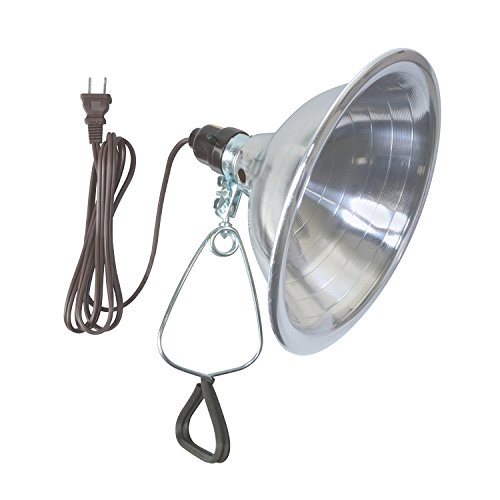
The Woods clamp lamp offers a versatile illumination and warmth solution with a 6-foot cord and an adjustable aluminum reflector designed to focus light precisely where it’s needed. The included on/off switch and clamp mounting simplify setup in crowded brooders or workspaces. UL listing indicates compliance with safety standards, making it a practical choice for indoor poultry areas where predictable heat is essential. Its 150W rating provides steady warmth without excessive energy usage, suitable for small to medium brooders and temporary heat zones.
LUCKY HERP Infrared Heat Lamp for Chickens

The LUCKY HERP 250W infrared heat lamp provides strong, efficient warming ideal for chicken coops and brooders. The red infrared light helps maintain a stable circadian rhythm for chicks, supporting rest and growth, particularly during nighttime. Its suitability for a range of small animals and reptiles makes it a flexible option for multi-species facilities. The lamp’s warmth is designed to minimize visual disruption while delivering reliable heat, contributing to higher chick survival rates in colder seasons.
DaToo Infrared Heat Lamp Bulb for Chickens

DaToo’s 150W infrared lamp is designed for rapid warm-up and compact heat distribution. A thickened aluminum coating enhances reflectivity, concentrating heat toward the targeted area to minimize heat loss. The red light is described as soft enough not to startle poultry while providing enough warmth for comfortable resting. This makes it suitable for early chick rearing and small-scale brooder setups, and it can be used in conjunction with protective housings to maintain safety.
WORLEYX 300 Watt Heat Lamp For Chicken Coop

WORLEYX’s 300W heat lamp emphasizes high-performance warmth with a professional carbon fiber element designed to deliver even heat distribution. The design targets outdoor and indoor coop use, with a weather-resistant build that resists rain and moisture. Two-stage temperature control allows adjustments to match the age and size of your flock, or changing weather. This lamp is well-suited for larger coops or multi-roost facilities where consistent heat coverage is essential across the space.
CERISURIO Chicken Coop Heating Lamp Brooder
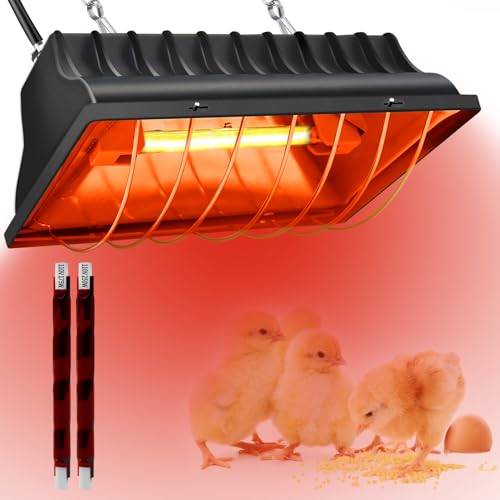
CERISURIO’s 250W chicken heater prioritizes safety and ease of installation. UL-compliant with overheat protection, it offers rapid heating and a broad heating area to cover brooders or small coops. The included durable stainless steel lampshade provides burns protection and year-round reliability. Hanging hardware is straightforward, enabling quick setup without complicated mounting. This option is appropriate for users seeking a robust indoor heat source with strong safety features.
Buying Guide: Key Purchase Considerations And Comparisons
When choosing a heat light for chickens, several factors influence performance and safety. Consider the flock size, coop design, and climate to pick the right wattage and heat distribution. Infrared lamps provide warmth with less visible light, which can be gentler for poultry during rest periods, while bright lamps may be useful for general lighting and behavior observation. Durability and weather resistance matter for outdoor setups. Look for UL or equivalent safety listings to ensure compliance with electrical standards.
Important considerations include heat delivery pattern, heat range, and the ability to adjust temperature settings. Some lamps offer two-stage controls or variable wattage, helping tailor warmth to different life stages and ambient temperatures. Durability features—such as carbon fiber elements or thickened aluminum reflectors—improve efficiency and reduce energy waste. Installation options, including clamps, chains, or hanging kits, influence how easily you can position heat sources in brooders or coops.
Safety should be a priority. Ensure the fixture has a protective lampshade to prevent direct contact, especially around brooder environments with curious chicks. Avoid exposed bulbs in damp or dusty areas, and use a fixture with a grounded cord and secure mounting. For outdoor runs, consider weather-resistant models designed to tolerate moisture and temperature fluctuations. If you manage multiple enclosures, the ability to control different zones independently can improve energy efficiency and chick health.
Price and longevity considerations also play a role. Higher-widelity reflectors and carbon fiber elements tend to offer better heat distribution and longer service life, reducing maintenance needs. For larger operations, models with two-stage or multi-watt configurations can optimize energy use by scaling warmth with flock size and weather. Evaluate the total cost of ownership, including energy costs, replacement bulbs, and mounting hardware, to identify the most economical choice over time.