Best IQ Toys for Dogs: Engaging Puzzle Games to Boost Smarts
Looking for dog toys that challenge the mind and slow down fast eaters? This guide highlights top IQ-building puzzle toys that deter boredom and promote healthy enrichment. Each choice is best for dogs that enjoy problem-solving, from puppies to smart, adults. The featured products emphasize treat-dispensing mechanics, multi-step puzzles, and slow-feeder designs to support mental stimulation and curb destructive behavior.
| Product | Brand | Best For |
|---|---|---|
| PETSTA Dog Puzzle Toys | PETSTA | Smart puppies and cats; beginners to intermediate puzzle fans |
| DR CATCH Dog Puzzle (Blue) | DR CATCH | Small to medium dogs; gradual challenge |
| FOXMM Interactive Dog Treat Puzzle | FOXMM | Medium to large dogs needing tougher play |
| Barkwhiz Dog Puzzle Toy | Barkwhiz | All breeds; adjustable challenge levels |
| Yoboeew Dog Puzzle Toys | Yoboeew | Smart dogs that enjoy multi-step sequencing |
PETSTA Dog Puzzle Toys – Treat Dispensing Enrichment
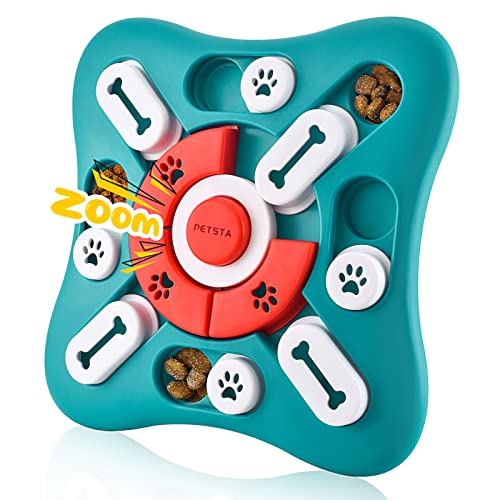
Best for curious dogs and cats at home who enjoy scent-based puzzles. PETSTA’s design includes a middle squeak button to attract attention and three progressively challenging layouts. The 16-hole treat dispenser slows feeding to encourage patience and problem solving, potentially extending playtime beyond 20 minutes. Suitable for puppies building focus and adult dogs that need ongoing mental work. A good all-around choice for households wanting a versatile, self-contained puzzle.
- Size: 10 x 10 x 1.3 inches
- Three difficulty modes; slow-feeding enhancement
- Engaging Spin & Slide and Seek & Hide mechanics
Best for: Beginners to intermediate puzzle lovers and households with both dogs and cats. Caution: Some pets may require gradual introduction to the sliders to avoid frustration.
DR CATCH Dog Puzzle (Blue) – IQ Training & Enrichment

Best for small to medium dogs and puppies needing a gentle yet engaging cognitive challenge. This interactive puzzle offers sliding parts to reveal hidden treats, promoting slow feeding and mental engagement. It can help reduce stress by providing a constructive outlet during quiet times and may encourage longer focus sessions for dogs learning new sequences.
- Size: L 9.44″ x W 9.44″ x H 1.14″
- Promotes problem-solving and eating enjoyment
- Supports slower feeding for digestion
Best for: Dogs new to puzzle toys or those who benefit from a low-to-moderate difficulty level. Caution: Small parts could be challenging for overly aggressive chewers.
FOXMM Interactive Treat Puzzle – Squeak Design

Best for a variety of dogs who enjoy a challenge with a tactile squeak. FOXMM’s 10 x 10 inch platform features a sliding mechanism and a central squeaker to draw attention, encouraging dogs to learn sequential steps to uncover treats. This design supports mental upgrades across breeds, especially when a moderate to higher difficulty level is preferred.
- Size: 10 x 10 x 1.2 inches
- Requires sequential thinking and problem-solving
- Squeak in the center to boost engagement
Best for: Smarter dogs that benefit from multi-step tasks. Caution: May be less suited for dogs who quickly become frustrated with sliding puzzles.
Barkwhiz Dog Puzzle Toy – Four Levels

Best for dogs wanting adjustable difficulty and longer play sessions. Barkwhiz offers four levels across multiple game styles, including flip and sliding tracks. It encourages dogs to learn new steps to recover treats, supporting enhanced scent detection and cognitive function. This toy is a strong choice for multi-dog homes with varied skill levels.
- Four challenges with level progression
- 14-hole slow feeder design helps digestion and focus
- Built from safe, durable materials and easy to clean
Best for: All breeds with adjustable difficulty. Caution: Higher levels may require more training and patience from owners.
Yoboeew Dog Puzzle Toys – Level 1-3

Best for smart dogs and cats that crave layered challenges. Yoboeew’s puzzle box increases in difficulty with more challenging steps, requiring dogs to manipulate red sliders and center parts to access hidden treats. The larger design supports bigger dogs while remaining suitable for some smaller breeds needing mental exercise.
- Upgraded, multistep puzzle
- Longer sequences and higher mind engagement
- Designed for smart dogs and mixed animal households
Best for: Dogs that enjoy complex sequencing. Caution: Taller puzzles may be toppled by vigorous chewers; supervise play.
Buying Guide: What To Look For In Dog IQ Toys
- Difficulty progression: Choose toys with multiple levels so your dog can gradually master each stage before advancing.
- Feeding style: If you want to slow eating, look for slow-feeder designs or puzzles that require time to uncover treats.
- Durability and materials: Prioritize non-toxic, durable plastics or rubber for safe, long-lasting use, especially for stronger dogs.
- Size and breed fit: Ensure the toy size fits your dog’s snout and jaw strength to prevent frustration or choking hazards.
- Maintenance: Select toys that are easy to clean after meals or play sessions to promote consistent use.
- Engagement cues: Toys with sounds (squeaks) or scent-guided components can boost motivation and engagement.
FAQs
- What age is best to start dog puzzle toys? – Start with beginner-level puzzles as soon as a puppy shows interest in problem-solving, then gradually move to more complex designs.
- Can puzzle toys help with aggressive chewers? – Puzzle toys can redirect chewing into problem-solving, but supervision is advised and you may need tougher, more durable options.
- How do I introduce a new puzzle toy? – Show the basic idea, reward early successes, and gradually expose more challenging sections as the dog grows confident.
- Are these toys safe for cats too? – Some designs are suitable for cats or multi-pet households; confirm product details before mixing pets.
- How long should a puzzle session last? – Start with 5–10 minutes and extend as the dog stays engaged, ensuring the session ends on a positive note.
- What if my dog loses interest? – Rotate toys to maintain novelty, or slightly increase difficulty to renew curiosity.