Live aquatic plants provide bettas with shelter, oxygenation, and enrichment that support natural behaviors. The following five options balance ease of care, compatibility with low- to medium-light setups, and visual appeal suitable for American home aquariums. Use the quick-reference table to compare plant types, light needs, and placement, then read the detailed notes below to decide which species best fits your tank size and maintenance routine.
| Product | Plant Type | Light Level | Notes |
|---|---|---|---|
| Marcus Fish Tanks — Amazon Sword Bleheri | Background | Moderate to Bright | 7–12 in; typically ~9 in; lush, broad leaves |
| Aquarium Plant Center — Salvinia Minima (Water Spangle) | Floating | Low to Medium | 12 plants; 60+ leaves; covers ~4″ diameter area |
| SubstrateSource — Java Fern Windelov | Midground | Low | Windelov variant; easy care; leaves can tint orange under bright light |
| Marcus Fish Tanks — Crinum Calamistratum | Tall/Statement | Moderate | 1 plant; 7–12 in tall; dramatic vertical accent |
| Marcus Fish Tanks — Anubias Nana Petite | Foreground | Low | Potted; 20–30 leaves; sturdy and compact |
Amazon Sword Bleheri For Betta Tanks

Amazon Sword Bleheri is a classic choice for betta tanks. The Marcus Fish Tanks grouping includes three sword plants that typically reach 7–12 inches, with many specimens around 9 inches. Their broad foliage creates a natural backdrop, offering hiding spots and surface interaction zones that help reduce stress for active or curious bettas. When healthy, they form dense mid- to background coverage, contributing to a balanced aquascape and providing steady oxygenation for freshwater setups.
Care is straightforward: moderate to bright lighting supports steady growth, and CO2 is not required for basic upkeep. These are true live plants, so they respond to substrate and water quality like any aquatic flora. Important: extreme weather can affect live plants; in winter, avoid ordering when temperatures are expected to dip below 30F at the day’s low point. Plant size can vary slightly among individuals, and roots should be anchored in substrate for stability. Regular trimming helps maintain space for your betta to swim and explore.
Salvinia Minima For Betta Tanks

Water Spangle Salvinia Minima is a versatile floating plant that provides surface cover and a natural resting area for bettas. The listing features 12 plants totaling over 60 leaves, designed to cover a circular area about 4 inches in diameter. This species is low- to medium-light tolerant and thrives in freshwater. Floating plants like Salvinia Minima help shade the water, reducing surface glare and giving bettas a calmer edge during foraging and exploration. It’s particularly useful in smaller tanks where substrate options are limited or when a quick, non-intrusive canopy is desired.
Caution: orders may be cancelled if the temperature is above 85F or below 38F in the next 7 days, so plan shipping windows accordingly. While low to moderate light supports this plant, routine maintenance is recommended to prevent mats from blocking gas exchange at the surface. Since it floats, no substrate is required, but periodic thinning ensures it doesn’t shade lower layers excessively.
Java Fern Windelov For Betta Tanks
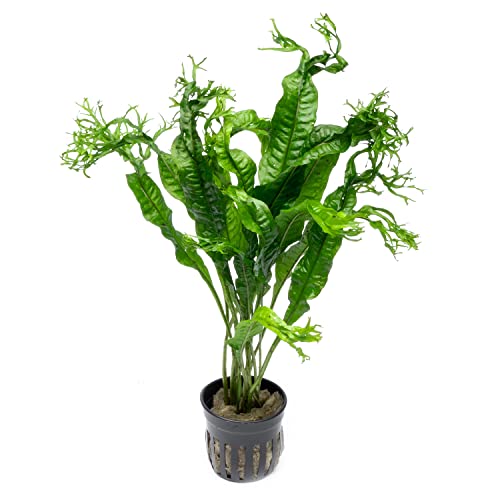
Java Fern Windelov is a popular choice for betta aquariums due to its hardy rhizome and forgiving light requirements. The Windelov variant features three-pronged leaf tips that create a bushy, textured look as the plant fills in. It tolerates low to moderate light and does not require CO2 supplementation, making it friendly for beginners. In appropriate conditions, it stays compact enough for midground placement, while still offering a lush, natural appearance. Under higher light, leaf tips can take on a subtle orange tint, adding visual interest to the display.
Placement is flexible: attach to driftwood or rocks with aquarium-safe adhesive, or plant at the substrate edge. Java Fern thrives in stable water conditions and gentle currents. Regular trimming keeps growth balanced and prevents overcrowding around your betta’s swimming path. For best results, avoid sharp substrate edges that could irritate fins and monitor nutrient levels to support steady growth.
Crinum Calamistratum For Betta Tanks

Crinum Calamistratum offers a dramatic vertical accent with tall, arching leaves that can reach 7–12 inches. This plant adds height and privacy zones within the aquarium, which can be particularly appealing in larger tanks or those with open swimming space. It pairs well with other species to create layered scenery and provides opportunities for bettas to explore at different levels. Crinum Calamistratum is resilient across a range of freshwater conditions and light levels, but it benefits from a nutrient-rich substrate and stable water chemistry to support steady, balanced growth.
Care considerations emphasize regular maintenance and pruning to prevent overgrowth that could restrict swimming space. While not CO2-intensive, consistent water quality helps maintain leaf vitality. Temperature swings due to shipping or seasonal changes can impact live plants, so plan deliveries during favorable weather and acclimate carefully to avoid stress on the plant and the resident betta.
Anubias Nana Petite For Bettas

Anubias Nana Petite is a compact, hardy choice for betta foreground setups. As a rhizome plant, it remains relatively small and features resilient leaves that tolerate low light and occasional nibbling from curious bettas. The product listing notes a pot containing 20–30 leaves, which makes it easy to establish a natural-looking patch on rocks or driftwood. Anubias Nana Petite is slow-growing, requiring minimal maintenance while still delivering a lush, leafy presence that bettas often use for shelter and exploration.
Seller notes a live arrival guarantee when temperatures are not extreme; if a plant arrives dead under verified conditions, a replacement is offered. Temperature fluctuations during shipping should be avoided, especially in winter. Anubias pairs well with faster-growing companions to balance tank aesthetics and growth rates, and its hardy nature makes it a reliable foundation plant in mixed-species layouts for betta tanks.
Buying Guide
Light Levels And Plant Suitability
Most betta-friendly plants tolerate low to moderate light. For beginners, prioritize Anubias, Java Fern, and Salvinia Minima, which thrive with minimal lighting. Amazon Sword Bleheri can handle brighter setups but grows best with consistent lighting and routine trimming. Crinum Calamistratum offers vertical drama with moderate light. Pairing floating plants with rooted species provides a balanced, multi-layered aquascape that suits diverse betta temperaments.
Tank Size, Layout, And Plant Placement
Consider tank dimensions when planning placement. Background plants like Amazon Sword Bleheri lend depth in medium and larger tanks; midground options (Java Fern Windelov) create texture without crowding; foreground plants (Anubias Nana Petite) anchor the visual foreground and reduce exposed substrate. Add vertical accents like Crinum Calamistratum to create hiding zones and dynamic movement as the betta swims around. If space is tight, start with a compact arrangement featuring Anubias and Java Fern before expanding with taller species.
Care Level, Maintenance, And Growth Rates
Hardier, slow-growing species minimize maintenance for busy households. Java Fern and Anubias typically require less pruning, while Amazon Sword Bleheri and Crinum Calamistratum may need occasional trimming to maintain balance and prevent shading of shorter plants. Floating Salvinia Minima requires occasional thinning to prevent surface matting, which can impede gas exchange and light penetration to lower levels.
Plant Type, Compatibility With Bettas, And Aesthetics
Combining floating and rooted plants offers a well-rounded environment for bettas. Floating plants provide surface cover and a sense of security; rooted plants offer structure and grazing surfaces for biofilm. When selecting plants, look for sturdy leaves and avoid those with sharp edges that could irritate fins. A multispecies layout enhances color variation and creates a more natural habitat that reduces stress and encourages exploration.
Weather, Shipping, And Acclimation
Live plants are sensitive to extreme temperatures. Many listings include warnings about weather-related delays or cancellations. Plan deliveries to avoid severe cold or heat; acclimate new plants gradually by floating them in the quarantine or display tank with a slow introduction to water parameters. Proper acclimation reduces transplant shock and improves establishment success, allowing bettas to benefit from healthier, more robust greenery.
- Floating vs rooted: use floating Salvinia Minima to shade and rootable plants like Anubias and Java Fern for structure
- Low-light compatibility: prioritize Anubias Nana Petite and Java Fern Windelov for easier care
- Tank balance: combine tall background plants with midground textures and foreground anchors to create depth
- Maintenance pacing: plan regular trims to maintain space for betta movement and to prevent overgrowth
- Shipping considerations: schedule deliveries during moderate weather and acclimate slowly upon arrival