Best Prong Collars for Dogs: Safe Training Tools for Calm Walks
Prong collars, when used correctly, can be effective tools for training dogs that pull on the leash. They work by applying even, controlled pressure around the neck to get your dog’s attention, while discouraging harsh corrections. This guide highlights five prong collars that balance durability, comfort, and performance, helping you compare options for your dog’s size and temperament. It also covers sizing tips, safety considerations, and how to use these collars responsibly as part of a positive training plan.
| Product | Brand | Key Benefit |
|---|---|---|
| Herm Sprenger Ultra-Plus Chrome Prong Collar | Herm Sprenger | German-made, chrome-plated steel; adjustable with removable links; swivel ring |
| Supet Prong Collar With Quick Release | Supet | Humane correction with quick release; extra link included |
| Mayerzon No Pull Martingale Collar | Mayerzon | Discreet martingale design; built-in links; camouflaged look |
| Aheasoun Prong Collar With Rubber Tips | Aheasoun | Four mm prongs; rubber tips; adjustable up to 23.6 in |
| Herm Sprenger Black Stainless Swivel Prong Collar | Dogline | Black stainless; swivel; removable links; necks up to 13 in |
Herm Sprenger Ultra-Plus Chrome Prong Collar

Herm Sprenger Ultra-Plus Chrome Prong Collar combines reliable German engineering with a practical design for daily training. The collar uses chrome-plated steel prongs with a swivel ring to minimize tangling, and each link features two blunt prongs with slightly beveled tips for smoother contact. It measures 22 inches in total length and uses a 3.0 mm wire, making it suitable for necks up to about 18 inches. Removable links let you tailor the fit, and up to four links can be added or removed. The construction emphasizes durability and consistent control during training.
Proper sizing is essential for safety and effectiveness. This collar should sit snugly just behind the dog’s ears, with the neck circumference measured and three inches added to determine the correct length. Ensure contact is even across the neck and that the prongs do not press on the trachea. The prongs are blunt to reduce risk, and the links allow length changes as the dog grows or coat changes. Use the collar with a structured training plan under supervision, focusing on calm corrections rather than harsh punishment.
Supet Prong Collar With Quick Release

Supet’s Prong Collar is designed to deliver corrective pressure without harshness, aligning with humane training. The collar uses rounded prong tips and a quick release buckle, making it easier to secure and remove. It spreads pressure naturally around the neck to curb pulling while protecting the airway and neck area. The package includes an extra link for on‑the‑go adjustments, and additional links can be added with pliers when needed. The design emphasizes safety and reliability, allowing handlers to cue behavior without shouting.
Sizing guidance is essential: measure the dog’s neck and add space to achieve a snug fit behind the ears. The quick release buckle simplifies on‑the‑go adjustments during walks or training sessions. Keep the collar clean, inspect padding if present, and replace links if there’s wear. Use with a calm, consistent training routine that rewards desired behavior to reinforce control and reduce leash tension over time.
Mayerzon No Pull Martingale Collar

Mayerzon’s No Pull Martingale Collar blends a discreet look with effective correction. The martingale design tightens gently when the dog pulls, while the built‑in links and sturdy nylon keep the neck protected. The collar is camouflaged to resemble a regular flat collar, reducing visible stigma while offering reliable training cues. It is marketed for small, medium, and large dogs, making it a versatile choice for households with mixed breeds. Durable hardware and a secure D‑ring enable reliable leash attachment for daily walks and training.
Fit and sizing details: select the appropriate size for your dog’s neck circumference and adjust using the included hardware. The no‑pull martingale design offers a discreet appearance while still delivering gentle correction. The nylon construction and heavy‑duty D‑ring enable secure leash attachment for daily walks and training. As with any training tool, pair use with positive reinforcement and a consistent routine to build calm leash manners over time.
Aheasoun Prong Collar With Rubber Tips
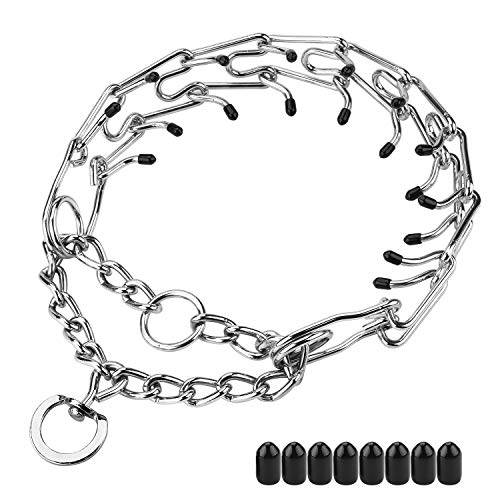
Aheasoun Prong Collar uses stainless steel prongs with rubber tips to cushion contact and reduce neck irritation. The collar is adjustable up to 23.6 inches and features a 4.0 mm prong diameter, suitable for a range of dogs from small to large. The chrome-plated stainless steel and durable construction provide long‑term use, while the rubber caps on the prongs help prevent injuries by limiting direct pressure on sensitive tissue around the neck.
Sizing is achieved by adding or removing individual links to fit the dog’s neck. Practitioners emphasize gradual, consistent corrections paired with positive reinforcement. Always supervise training sessions and check for signs of discomfort or skin irritation. Regular inspection and occasional replacement of worn links help maintain safety and effectiveness as your dog grows.
Herm Sprenger Black Stainless Prong Collar With Swivel
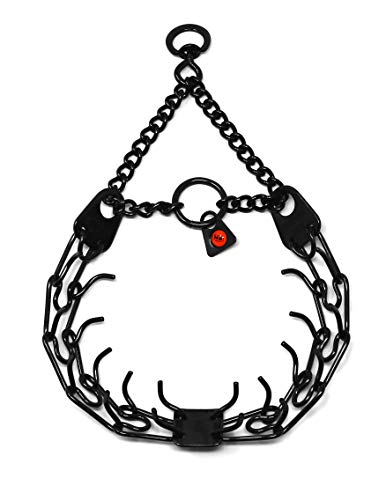
Herm Sprenger Black Stainless Prong Collar With Swivel combines the durability of black stainless steel with a 360‑degree swivel for leash flexibility. The model is designed for neck sizes up to 13 inches with a 2.25 mm prong diameter and a 16‑inch overall length. The collar uses removable links to fine‑tune fit, with a swivel ring to reduce leash twist. While marketed for small dogs, it shares Herm Sprenger’s safety‑minded construction, including rounded prong tips and secure link interlocking.
Fit guidance involves measuring the neck, then adding space per the sizing guide to ensure the collar sits behind the ears for the most effective correction. For a small‑dog option with lighter prongs, this can be appropriate for breeds requiring gentler correction under supervision. Always monitor for skin irritation and adjust links as the dog grows or coat changes. Use as part of a broader training plan that emphasizes calm behavior and positive reinforcement.
Buying Guide
Sizing And Fit
Choosing the right size hinges on correct neck measurement. For most dogs, the collar should rest snugly behind the ears with a small amount of room to move. If the collar is too loose, it won’t provide reliable correction; if it’s too tight, it can cause discomfort. When in doubt, consult a professional trainer and use a trial period to gauge how your dog responds to corrections. Always begin with the smallest effective size and adjust gradually.
Prong Diameter And Link Adjustability
Prong diameters range from about 2.25 mm to 4.0 mm. Larger dogs typically need bigger prongs and longer collars, while smaller breeds do better with lighter options. Look for models with removable or extra links so you can dial in the exact length behind the ears. When changing links, do it slowly and recheck fit after each adjustment to ensure the collar remains comfortable and effective.
Materials And Durability
Materials influence durability and safety. Stainless steel prongs or chrome-plated steel offer good longevity; black stainless variants add corrosion resistance and a discreet look. Check that prongs are rounded and tips beveled to minimize rough contact. Removable links should interlock securely, and swivels or quick-release buckles should operate smoothly without snagging the fur or skin.
Safety And Humane Use
Use prong collars as training aids, not punishment devices. Pair corrections with positive reinforcement, keep sessions short and focused, and monitor your dog for signs of stress or irritation. Avoid leaving a collar on all day and consult a professional trainer if you’re unsure how to use it safely. If your dog shows persistent discomfort, discontinue use.
Maintenance And Care
Maintenance matters for safety and effectiveness. Rinse after outdoor use, dry thoroughly, and store in a dry place. Periodically inspect for bent links and worn prongs. Clean the hardware and lubricate moving parts if recommended by the manufacturer. Replace worn components promptly to keep consistent pressure and avoid unexpected failures during training.
Choosing For Your Dog’s Size And Temperament
For small or sensitive dogs, lighter prongs and a shorter collar often work best. For strong pullers, choose a longer collar with slightly larger prongs and a reliable swivel. Always select a tool that you can supervise and train with responsibly, and tailor your approach to your dog’s needs rather than applying a one-size-fits-all solution.
Ethical And Legal Considerations
Regulations around prong collars vary by region. Check local guidelines and seek professional advice if unsure. Use this tool as part of a humane training program that prioritizes your dog’s safety and well-being, and emphasize reward-based learning and safety throughout the process.