Best Rodenticide for Mice: Top Bait Blocks and Pellets
Effective rodent control starts with selecting the right product. The following options emphasize blocks, pellets, and soft baits designed to target mice while limiting risk to children, pets, and non-target wildlife. Each choice highlights formulation, active ingredients, and typical usage to help homeowners, landlords, and pest-control professionals decide which product lines fit infestation levels and storage conditions.
| Product | Brand | Form / Flavor | Size | Notes |
|---|---|---|---|---|
| Peanut Butter Flavor Bait Block For Mice | JT Eaton | Block / Peanut Butter | 4 lb pail (64 blocks) | Anticoagulant with diphacinone 0.005% |
| Apple Flavor Bait Block For Mice | JT Eaton | Block / Apple | 4 lb pail (64 blocks) | Anticoagulant with diphacinone 0.005% |
| Peanut Butter Block Anticoagulant | JT Eaton | Block / Peanut Butter | 9 lb pail (144 blocks) | Anticoagulant with diphacinone 0.005% |
| Havoc Rodenticide Pellet Pack | Neogen | Pellet / N/A | 8 lb pail | Second-generation anticoagulant; brodifacoum 0.005% |
| Soft Bait RAT/MICE Rodenticide Poison | First Strike | Soft bait / N/A | 16 lbs | Palatability and aroma; designed for high-infestation areas |
Below is a quick look at each option’s focus and what to consider when choosing among them. The list prioritizes products that address common indoor mouse issues while offering different formats to fit varying spaces and infestation levels.
Peanut Butter Flavor Bait Block For Mice

JT Eaton’s peanut butter-flavored anticoagulant bait block is a dense, palatable option for homes and light commercial settings. The product uses diphacinone at 0.005% as the active ingredient to disrupt blood clotting, typically taking effect after a few days of ingestion. The 4-pound pail contains 64 blocks, offering a steady supply for moderate infestations. This format is easy to place in stations along walls, behind appliances, and in other sheltered areas where mice commonly travel. Proper placement is essential for effectiveness and safety around pets and children.
Considerations include storage in a cool, dry place away from direct sunlight and ensuring placement away from non-target areas. Rotate bait as needed to maintain attractiveness and monitor bait consumption to gauge activity levels. While effective for mice, combine with sanitation improvements and exclusion practices to reduce re-entry opportunities for rodents and minimize ongoing feeding opportunities.
Apple Flavor Bait Block For Mice

This JT Eaton option uses an apple-flavored formulation to attract a wide range of rodents, including house mice. The anticoagulant mechanism relies on diphacinone at 0.005%, an active ingredient that disrupts the blood’s ability to clot after ingestion. The 4-pound pail contains 64 blocks, providing a durable supply for kitchens, basements, garages, and storage rooms where mice typically travel along walls and behind stored goods. The apple flavor adds a familiar aroma that can encourage sustained feeding over several days.
Practical usage tips include placing blocks in bait stations or secure gaps where pets cannot reach, rotating locations to prevent habituation, and pairing with trash management and sealing entry points. Regularly inspect bait stations and maintain a clean environment to minimize rodent harborage. This product is suitable for moderate infestations and controlled settings where preventive measures are also in place.
Peanut Butter Block Anticoagulant

This 9-pound pail from JT Eaton provides a larger supply of peanut butter-flavored bait blocks with the same anticoagulant mechanism using diphacinone at 0.005%. With 144 blocks included, it is suited for homes or small facilities facing recurring rodent pressure or needing extended baiting runs. The peanut butter flavor is widely recognized for its appeal to mice and can improve ingestion rates during the first days of placement. As with all anticoagulant products, adhere to label directions, use child- and pet-safe placement, and routinely monitor bait consumption to avoid stale or weathered bait.
Users should consider the environment, storage temperature, and potential exposure risks when selecting this option. In spaces with frequent reset or higher humidity, consider replacing blocks every few weeks to maintain attractiveness and effectiveness while maintaining ongoing pest-management practices such as sealing entry points and eliminating food sources.
Havoc Rodenticide Pellet Pack
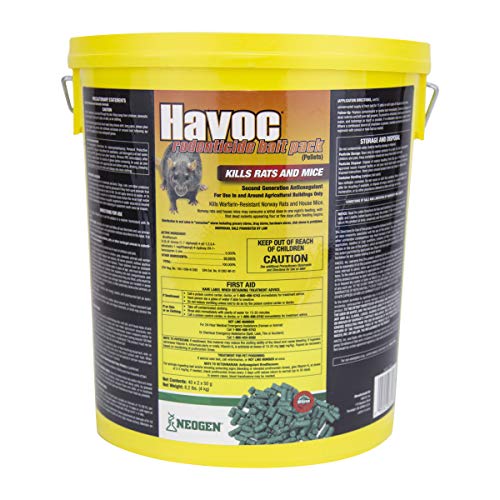
Neogen Havoc Pellet Pack delivers a pellet-based approach with a second-generation anticoagulant, brodifacoum, at 0.005% active ingredient. Pellets can be advantageous in areas where mice and rats feed on uniform, compact pieces or where placement flexibility is needed. The 8-pound pail provides a longer-lasting supply, suitable for basements, storage rooms, and utility areas. Brodifacoum often offers a longer residual effect and can be effective in severe infestations, but it requires careful handling, especially around domestic animals and non-target wildlife. Follow label directions for placement frequency and monitor bait uptake across locations.
When comparing to block baits, pellets may be more appealing in certain environments or among rodents with specific feeding habits. Consider the layout of the space, the presence of water sources, and seasonal activity to optimize placement. Regularly inspect bait stations and adjust quantities to prevent waste and contamination while maintaining a steady supply of active bait during an infestation.
Soft Bait For Mice
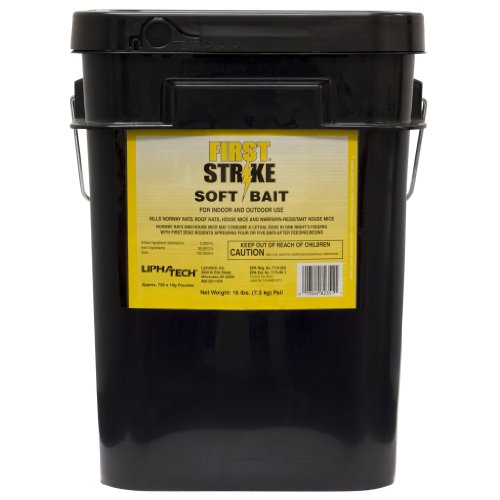
First Strike Soft Bait RAT/MICE Rodenticide Poison represents a soft bait approach designed for high-infestation settings or areas with competing food sources. The listing emphasizes palatability, aroma, and ease of use, making it a practical choice when hard baits are less attractive due to environmental conditions. The product is marketed as a soft bait option, with a 16-pound package suitable for larger properties or ongoing rodent control programs. Note that regional restrictions exist for certain products, so verify state-specific regulations before purchase and use. Follow label directions for safe handling and placement, and coordinate with sanitation and exclusion efforts to maximize results.
Buying Guide
Key factors to consider when choosing a rodenticide for mice include product form, active ingredient, bait attractiveness, and the environment where it will be used. The right choice balances effectiveness with safety for people and pets, while fitting the infestation level and space constraints. Below are important considerations and a simple comparison to help evaluate options.
- Form factor and placement: Blocks and pellets are typically used in stations or protected locations, while soft baits can be useful in high-traffic areas with ample feeding opportunities. Consider where rodents travel and how accessible bait stations are to non-targets.
- Active ingredient and mode of action: Anticoagulants like diphacinone (0.005%) disrupt blood clotting and require repeated or continued exposure, often providing robust control with careful monitoring. Brodifacoum (0.005%) is a second-generation anticoagulant with a strong lethal effect but may require stricter handling and placement to avoid non-target exposure.
- Target species and infestation level: All selected products address mice and rats, but some formats are better suited for ongoing control or severe infestations. Larger pail sizes (e.g., 9 lb or 8 lb) support longer-term treatments in larger spaces.
- Flavor and palatability: Peanut butter and apple flavors are widely preferred by mice and can improve bait uptake in initial days. If a particular rodent population shows food preferences, choosing a flavor that matches can increase effectiveness.
- Safety and storage: Always store bait in its original container, away from children and pets. Keep bait in a cool, dry place and replace food sources in the environment to prevent non-target exposure.
- Regulatory and regional considerations: Some products may have restrictions or labeling differences by region. Check local regulations and follow EPA-labeled usage directions to ensure compliant and safe application.
- Monitoring and rotation: Regularly inspect bait stations, monitor consumption, and rotate products if activity remains after an initial treatment. Pair rodenticide use with exclusion, sanitation, and waste management for best results.
Product Comparison Snapshot
| Product | Form | Active Ingredient | Flavor / Type | Typical Size |
|---|---|---|---|---|
| Peanut Butter Flavor Bait Block For Mice | Block | Diphinacone 0.005% | Peanut Butter | 4 lb (64 blocks) |
| Apple Flavor Bait Block For Mice | Block | Diphinacone 0.005% | Apple | 4 lb (64 blocks) |
| Peanut Butter Block Anticoagulant | Block | Diphinacone 0.005% | Peanut Butter | 9 lb (144 blocks) |
| Havoc Rodenticide Pellet Pack | Pellet | Brodifacoum 0.005% | N/A | 8 lb |
| Soft Bait RAT/MICE Rodenticide | Soft Bait | Not Specified in Listing | N/A | 16 lbs |
In summary, selecting the best rodenticide for mice depends on matching the infestation level, space limitations, and safety considerations with the product format and active ingredient. For ongoing, household-scale infestations, peanut butter or apple-flavored blocks in combination with proper storage, bait rotation, and exclusion practices can offer reliable control. For larger properties or persistent problems, higher-volume formats like 9 lb blocks, 8 lb pellets, or soft baits may provide extended coverage and faster uptake. Always follow label directions and integrate with non-chemical strategies to reduce mouse activity effectively.