Best Rodi System for Reef Tank: Top Reef Aquarium RO/DI Picks
Keeping a reef tank requires pristine water. A reliable RO/DI system removes chlorine, chloramines, nitrates, and dissolved solids, delivering water that supports coral growth and vibrant reef life. The following five systems are well-suited for reef aquariums, offering varying capacities and filter stages to fit nano to large SPS setups. The comparison table below helps you weigh capacity, stage count, and reef-ready features at a glance.
| Product | Brand | Stages | Capacity (GPD) | Notes |
|---|---|---|---|---|
| LiquaGen Heavy Duty 7 Stage | LiquaGen | 7-stage | 150 | High capacity; triple inline DI; compact footprint |
| Koolermax AR-122 | Koolermax | 6-stage | 150 | All-in-one RO/DI with color-changing DI filters |
| Aquatic Life Twist-In 4-Stage | Aquatic Life | 4-stage | 75 | Compact, easy filter changes; suitable for smaller systems |
| Max Water 6 Stage 200 GPD | Max Water | 6-stage | 200 | High output with built-in monitoring options |
| NU Aqua 4-Stage RODI System | NU Aqua | 4-stage | 100 | Solid warranty; 120-day trial |
LiquaGen 7-Stage RODI System (150 GPD)

This seven-stage LIquaGen system is designed for reef environments that demand consistent high-purity water. Filtration stages include a 5-micron polypropylene sediment filter, an activated carbon stage, a coconut carbon stage, a 150 GPD RO membrane, and inline DI canisters. The design focuses on space efficiency while maintaining robust filtration for coral, live rock, and invertebrates. A manual flush valve helps extend membrane life, and the durable fittings reduce leak risk during operation. The unit carries a two-year manufacturer warranty and lifetime customer support for long-term reliability.
Compatibility features include a garden hose connection and all tubing and connections needed for installation. The inline DI canisters are designed for frequent resin changes, which reef hobbyists often perform to sustain zero TDS in the output. If you pair this unit with a storage tank, you may want to add an auto shut-off valve and a check valve to simplify operation and conserve water. This model suits mid-sized reef tanks that require steady, high-purity water with minimal maintenance downtime.
Koolermax AR-122 6-Stage RO+DI System

The Koolermax AR-122 is a six-stage RO/DI filtration setup designed for reef and marine environments that need reliable output and a compact footprint. It uses sediment filtration, dual carbon stages, a high-capacity RO membrane, and dual DI filters to reduce total dissolved solids effectively. This configuration supports both saltwater and freshwater setups, delivering consistent water quality suitable for sensitive corals and invertebrates. The system emphasizes durability and straightforward maintenance, making it a practical choice for hobbyists seeking a reliable mid-range RO/DI solution.
With a 150 GPD RO membrane and complete prefilters, the AR-122 is capable of supporting frequent water changes without long downtime. The color-changing DI filters provide a quick visual cue when resin is nearing exhaustion, helping maintain water purity without guesswork. Reef keepers should monitor DI resin replacement schedules and DI resin capacity to maintain zero-TDS output, especially in systems with high nutrient input. It remains a strong option for medium-sized to larger reef tanks that require steady production of clean water.
Aquatic Life Twist-In 4-Stage RO/DI System
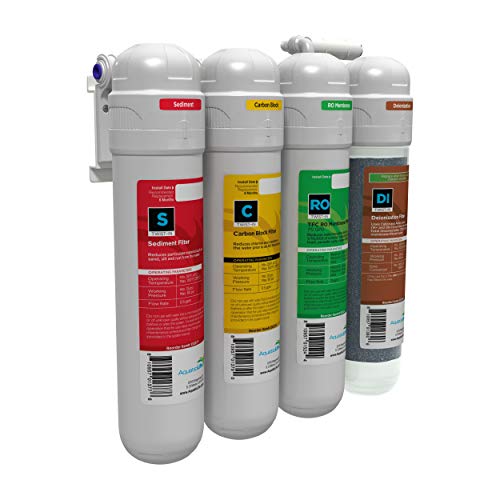
The Aquatic Life Twist-In unit is a compact four-stage RO/DI filtration system designed for reef hobbyists who need a smaller footprint without sacrificing water quality. Producing up to 75 GPD, it combines a sediment filter, carbon filtration, RO membrane, and a DI stage to reduce TDS as water passes through the system. This setup is well-suited for smaller tanks or space-constrained installations where quick, straightforward maintenance is desired. The twist-in design simplifies filter changes, reducing downtime during routine maintenance.
For reef use, the key benefit is the reliable reduction of dissolved solids, ensuring stable salinity and healthier conditions for corals and other reef organisms. While the 75 GPD capacity is lower than larger units, it remains adequate for many nano- to midsize reef setups with moderate water-change schedules. Reef keepers should plan maintenance around resin and membrane life to sustain optimal water purity over time.
Max Water 6-Stage 200 GPD RO/DI System

The Max Water 6-stage system delivers a high-output solution, producing up to 200 GPD with a robust six-stage filtration chain. The design emphasizes efficiency in water purification, typically including a sediment pre-filter, carbon pre-filter, RO membrane, and DI stages to reach very low TDS levels. An appealing feature is the inclusion of monitoring tools such as a digital TDS meter and a pressure gauge, which help reef keepers track water quality and system performance over time. This model is well-suited for larger reefs or systems requiring rapid water turnover.
For reef applications, the 200 GPD capacity supports frequent water changes and larger volumes of water preparation without sacrificing purity. It’s essential to maintain resin and membrane integrity and to monitor DI capacity as part of ongoing maintenance. As with all high-capacity systems, ensure proper installation space and compatible plumbing to avoid leaks and ensure steady operation in busy reef setups.
NU Aqua 4-Stage RODI System

The NU Aqua Reef Series offers a four-stage RO/DI filtration lineup with a 100 GPD capacity. It includes a dry, straightforward setup and a 120-day home trial, backed by a three-year manufacturer warranty and lifetime support. The four-stage process typically consists of sediment filtration, carbon filtration, RO membrane, and DI polishing, designed to produce high-purity water suitable for reef tanks. This system provides a balanced option for hobbyists who want reliable filtration with a favorable warranty and support structure.
NU Aqua systems are configured for straightforward installation and maintenance, helping reef keepers manage daily or weekly water changes with consistent water quality. The 100 GPD capacity is adequate for many medium-sized tanks, particularly when combined with a careful water-change regimen. Prospective buyers should weigh resin replacement costs and the ongoing need to replace DI resin to sustain 0 TDS output over time.
Buying Guide
Key factors to consider when selecting a reef-ready RO/DI system include tank size, daily water demand, and future growth. For larger reefs, prioritize higher GPD capacity to keep up with water changes and preparation needs. DI stage capacity is critical in achieving consistent 0 TDS water, which supports stable salinity and coral health over time. Systems with multiple DI canisters or easy resin-change access reduce downtime during maintenance.
Filter stage configuration matters for reef tanks. Four-stage setups are compact and affordable, suitable for nano and mid-sized tanks, while seven- and six-stage designs offer more polishing power, longer membrane life, and greater flexibility for higher-output needs. Consider whether a model includes a manual flush valve, a built-in TDS meter, or a pressure gauge, as these features help monitor performance and extend component life. Always verify compatibility with your water supply pressure and plumbing under-sink space before purchase.
Maintenance planning is essential for reef hobbyists. Membranes and DI resin gradually lose efficiency; expect to replace DI resin periodically and membranes on a longer cycle. Some systems include a 120-day trial or warranty that reduces risk when trying a new setup, while others emphasize long-term support from the manufacturer. Evaluate the total cost of ownership, including initial price, replacement parts, and estimated resin/membrane life, to gauge long-term value for a reef aquarium.
Finally, consider redundancy and expandability. If you anticipate growth of your reef system or additional tanks, a higher-capacity RO/DI unit with modular DI canisters and straightforward upgrades may be worth investing in now. In reefkeeping, water purity directly influences coral coloration, growth rates, and overall tank stability, making a well-chosen RO/DI system a foundational, long-term investment.