Best Sand for Reef Tanks: Top Reef-Safe Options
Choosing the right sand is essential for reef tanks. Ocean-safe aragonite sands help stabilize pH, support beneficial bacteria, and create a natural habitat for corals and invertebrates. This guide reviews five top reef-safe sands, highlighting buffering capabilities, grain size, cleanliness, and suitability for mixed reefs. Each product is widely available on Amazon and commonly used by hobbyists across the United States.
| Product | Brand | Size (lb) | Key Benefit |
|---|---|---|---|
| Aqua Natural Oolitic Aragonite 10lb Sand | Aqua Natural | 10 | Unsurpassed buffering; stable pH around 8.2; sustainable source |
| Carib Sea Arag-Alive Substrate 10lb | Carib Sea | 10 | Millions of beneficial bacteria; enhances biological filtration |
| Aqua Natural Oolitic Aragonite 20lb Sand | Aqua Natural | 20 | Same buffering benefits at larger quantity |
| Carib Sea ACS00050 Aragonite Reef Sand 40lb | Carib Sea | 40 | 100% aragonite; stable pH; reduces detritus buildup |
| Nature’s Ocean Aragonite Sand Substrate 20lb | Nature’s Ocean | 20 | Supports water balance; aids filtration; reef-friendly |
Aqua Natural Oolitic Aragonite 10lb Sand

Aqua Natural Oolitic Aragonite 10lb sand delivers reliable buffering for reef tanks. Its oolitic aragonite composition helps maintain seawater alkalinity and stabilizes pH around 8.2, supporting coral growth and invertebrate health. With about 98% calcium carbonate and minimal impurities, this sand is designed for long-term reef systems. Sourced from a sustainable, naturally renewable aragonite supply, it blends with existing substrates and fosters a healthy microbiofilm that benefits corals and invertebrates alike.
- Unsurpassed buffering capacity; stabilizes pH near 8.2
- 98% pure calcium carbonate; minimal impurities
- Naturally renewable oolitic aragonite from a sustainable source
Recommendations: rinse lightly before adding to the tank to reduce initial cloudiness. Ideal for new setups and established reefs seeking stable alkalinity.
Carib Sea Arag-Alive Substrate 10lb

Carib Sea Arag-Alive Substrate Special Grade Reef Sand is designed to jump-start biological filtration in reef tanks. The substrate contains millions of beneficial marine bacteria to help break down waste and support a stable nitrogen cycle. The aragonite-based grains promote a healthy pH around 8.2 and enhance water clarity through natural grain structure that minimizes detritus buildup. This sand is suitable for reef systems and can be used alongside many saltwater configurations.
- Contains millions of beneficial bacteria for faster biofiltration
- Special-grade reef sand with reef-friendly grain size
- Supports stable pH and clear water in marine setups
Usage notes: commonly used in reef and mixed-species tanks; consider pairing with appropriate filtration to maximize benefits in systems with higher bioload.
Aqua Natural Oolitic Aragonite 20lb Sand
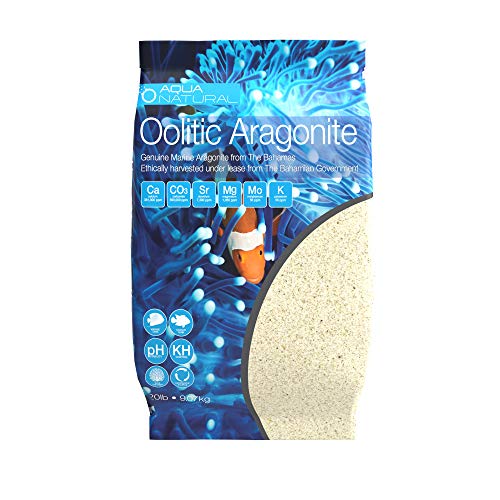
The 20lb bag offers the same buffering and purity advantages as the 10lb version, making it a cost-effective option for larger tanks or future expansion. The oolitic aragonite composition supports stable carbonate hardness and pH around 8.2, helping corals and invertebrates thrive. Its renewable sourcing aligns with sustainable hobby practices, and the sand blends seamlessly with existing substrates for a natural look in reef environments.
- 8.2 pH stabilization with high CaCO3 content
- Renewable oolitic aragonite from a sustainable source
- Low impurity profile to protect delicate tank inhabitants
Recommended depth: typically 1–2 inches for new setups and 2–3 inches in established reefs to balance biological filtration and flow.
Carib Sea ACS00050 Aragonite Reef Sand 40lb
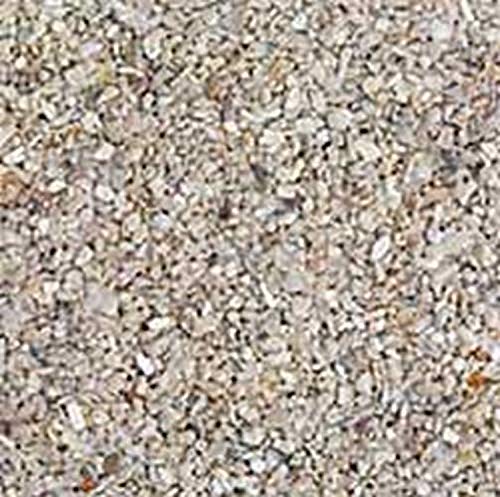
Carib Sea ACS00050 Aragonite Reef Sand is designed for mid-to-large reef systems. Made from 100% aragonite, it provides robust buffering and a stable pH environment for marine aquariums. The grain size helps reduce detritus buildup by promoting better water flow and gas exchange within the substrate. This make it a reliable choice for aquariums housing corals, clams, and other reef-dwellers that benefit from a consistent alkaline balance.
- 100% aragonite; strong buffering and pH stability
- Grain size minimizes detritus buildup
- Well-suited for medium to large reef systems
Tip: for best results, consider a gradual transition when upgrading an existing substrate to avoid sudden shifts in water chemistry.
Nature’s Ocean Aragonite Sand Substrate 20lb
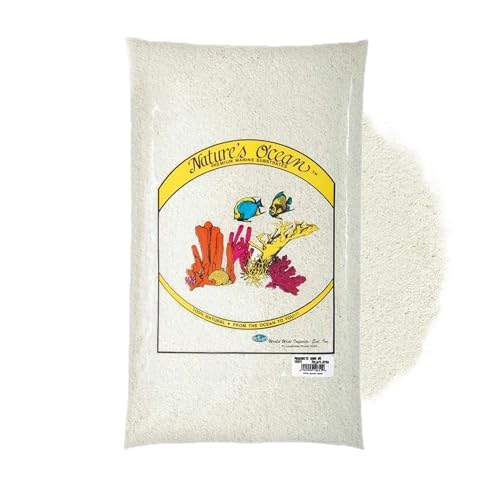
Nature’s Ocean Aragonite Sand Substrate comes from the ocean floor, offering a fine-grain aragonite base ideal for reef and saltwater tanks. The sand helps maintain water balance by supporting stable pH and increasing carbonate hardness, which contributes to a consistent environment for marine species. Its high surface area also supports essential biological processes and aids in water filtration, delivering clearer, healthier tank water over time.
- Fine-grain aragonite sourced from the ocean floor
- Supports stable pH and higher carbonate hardness
- Promotes filtration and water clarity in reef tanks
Best used in a shallow to moderate layer, with gradual adjustments when transitioning from other substrate types to avoid abrupt chemistry changes.
Buying Guide
Key factors to consider when selecting reef sand include composition, grain size, cleanliness, and long-term impact on water chemistry. Aragonite sands offer buffering against pH drops and help sustain stable carbonate balance, which is crucial for calcifying corals and invertebrates. Look for high CaCO3 content (often around 98% or higher) and clean, dust-free packaging to minimize turbidity when filling the tank.
Grain size affects flow, detritus buildup, and root-like movement of microfauna. Fine sands look natural but can cloud more easily; coarse sands provide better flow and mechanical stability but may compact in deeper layers. Reef hobbyists typically prefer a medium grain size (around 1.0–2.0 mm) to balance filtration and aesthetics. Consider a depth of 1–2 inches for smaller tanks and 2–4 inches for larger systems or deep sand beds, adjusting to tank inhabitants and flow patterns.
Cleanliness and pre-washing matter. Some products are triple-washed or kiln-dried to reduce dust and toxins. If your sand ships dusty, rinse in a bucket before adding to the aquarium to prevent cloudy water and possible gas pockets from trapped air. Sustainability matters too: many reef sands are sourced from natural, renewable aragonite deposits, aligning with responsible hobby practices.
Arguably, the most important feature is buffering capacity. Sands labeled as aragonite with high calcium carbonate content help maintain pH around 8.2 and support alkalinity. For mixed reefs with hard corals, a substrate with robust buffering reduces the frequency of chemical adjustments and supports coral growth. Bacterial content—such as Arag-Alive—can also influence how quickly a new tank stabilizes, especially in systems with higher bioload.
Comparing the options, Aqua Natural oolitic aragonite sands excel for buffering and long-term stability, whether in 10 lb or 20 lb bags. Carib Sea Arag-Alive substrates emphasize beneficial bacteria to accelerate biofiltration, a valuable feature for new tanks or heavily stocked systems. Nature’s Ocean aragonite sands provide a balanced approach with emphasis on water balance and filtration support, suitable for a wide range of reef setups. For larger aquariums, larger bag sizes like 40 lb can simplify substrate upgrades or extensions without compromising chemistry.
In sum, the best sand for your reef tank depends on your priorities: buffering strength and pH stability, biological filtration, size and maintenance needs, or aesthetic preferences. All selected options are reef-friendly, aragonite-based substrates designed to support stable water chemistry and healthy marine life.