Best Sponge Filter for Fish Tanks: Top Picks for Small to Large Setups
Choosing the right sponge filter can help maintain clear water and a healthy environment for fish, shrimp, and fry. This article highlights five reliable options that suit a range of tank sizes from 3 to 60 gallons. Each product combines mechanical and biological filtration with easy maintenance, making them popular for nano tanks and larger enclosures alike. Read on to compare features, setup, and cleaning considerations to find the best fit for your aquarium.
| Product | Tank Range | Filtration Type | Notes |
|---|---|---|---|
| Pawfly 3 Pack Aquarium Sponge Filter | 5-10 gal | Mechanical & Biological | Quiet, compact, easy to clean |
| AQUANEAT Aquarium Bio Sponge Filter (Large) | Up to 60 gal | Mechanical & Biological | Air infusion increases oxygen |
| AQUANEAT 3 Pack Aquarium Bio Sponge Filter (Small) | Up to 10 gal | Mechanical & Biological | Simple setup with air pump |
| AQQA Aquarium Sponge Filter Submersible | 5-20 gal | Mechanical & Biological | Replaceable media; quiet operation |
| ALEGI Aquarium Sponge Filter Pad | Custom sizes | Mechanical | Cut-to-size for flexible fit |
Pawfly 3 Pack Aquarium Sponge Filter

The Pawfly filter set includes three compact sponge filters designed for small tanks (5-10 gallons). The sponge provides both mechanical and biological filtration while trapping debris without pulling out fish. Each unit measures about 2 inches in diameter and 4.8 inches high, making them suitable for nano tanks, breeding tanks, or fry tanks. Cleaning is straightforward: detach and rinse in tank water every 2–4 weeks, avoiding tap water to preserve beneficial bacteria. These filters are ideal for Betta, shrimp, and small community setups.
AQUANEAT Bio Sponge Filter (Large Up To 60 Gal)

This large AQUANEAT sponge filter combines mechanical and biological filtration with an air infusion chamber that creates fine bubbles, boosting dissolved oxygen. It is safe for fish because the soft sponge traps debris without pulling in your fish. Installation is simple—attach an airline to the unit and run the pump. Regular cleaning involves rinsing the sponge in tank water. It’s suitable for breeders, shrimp, and small to medium tanks, offering robust performance where higher filtration capacity is needed.
AQUANEAT 3 Pack Bio Sponge Filter (Small Up To 10 Gal)

Designed for compact tanks, this 3-pack from AQUANEAT provides dual filtration functions—mechanical and biological. The air infusion chamber delivers subtle bubbles that help oxygenate water, while the soft sponge material protects fry and small fish from being drawn into filters. Setup requires an airline connection and an operating air pump. The sponges are easy to rinse in tank water and reinsert, supporting quick maintenance between feedings and partial water changes.
AQQA Sponge Filter Submersible (5-20 Gal)
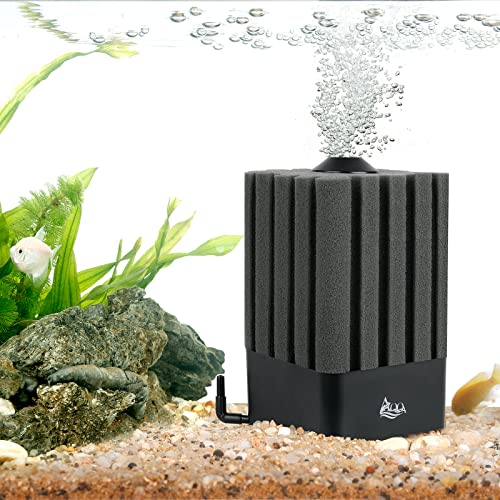
The AQQA sponge filter operates quietly as an air-powered unit, suitable for tanks from 5 to 20 gallons. It emphasizes mechanical filtration with a vertical design that increases filtration area. The included bio ceramic media balls provide additional biological filtration, aiding in nitrification. Replaceable sponges and media make maintenance straightforward. Note that an appropriate air pump and hose are required, as they are not included with the package. This filter supports breeding fry and shrimp habitats with gentle water movement.
ALEGI Cut-To-Size Sponge Filter Pad

The ALEGI sponge filter pad offers a versatile, cut-to-size solution for larger filtration needs. Its high-density structure delivers efficient mechanical filtration, capturing suspended particles and waste to maintain water clarity. Made from durable sponge material, the pad resists deformation and maintains filtration efficiency over time. Easy installation allows users to tailor the pad to fit canister or hang-on filter systems by trimming to the exact dimensions required for the aquarium setup. This option works well for mid-sized to larger tanks needing flexible filtration media.
Buying Guide: Key Purchase Considerations
- Tank size and filtration needs: Match filter capacity with your aquarium volume. Larger tanks may require stronger or multiple sponge filters, while nano tanks benefit from compact options with gentle flow to protect fry and delicate species.
- Filtration type and flow: Sponge filters provide both mechanical and biological filtration. The flow rate should be appropriate for the species in the tank; too strong a current can stress fish, while too weak may reduce waste removal.
- Maintenance and media: Look for replaceable sponges and optional bio media (ceramic rings or balls) to optimize biological filtration. Consider how easy it is to clean sponges without destroying beneficial bacteria.
- Air pump requirements: Most sponge filters rely on an air pump. Check if the package includes tubing and adapters or if you must supply your own pump with compatible airline tubing.
- Durability and material: High-density sponge and durable housings resist tearing and deformation. Long-term stability is beneficial for ongoing performance.
- Installation flexibility: Some filters are cut-to-size or come in multi-pack configurations. Choose models that fit your aquascape and filter system architecture (internal, corner, or canister setups).
- Compatibility with livestock: For fry or shrimp, prioritize gentle filtration and avoid gear that can trap or harm small creatures. Always monitor new livestock after introducing filtration.
- Cleaning regimes: Regular rinsing in tank water prevents loss of beneficial bacteria. Avoid tap water, which can kill nitrifying cultures and cause algae blooms if minerals are released into the tank.