Best Thinking Toys for Dogs to Boost IQ and Mental Fun
Dogs thrive when their minds are challenged. Thinking toys combine problem-solving with tasty rewards, turning playtime into brain-boosting sessions. This article highlights five top dog puzzle toys that promote cognitive development, reduce boredom, and encourage healthy, focused play. Each pick includes distinct mechanisms—sliders, spinners, treat dispensers, and multi-level challenges—so you can match your dog’s size, skill, and learning pace. Below is a quick summary to help you compare at a glance.
| Product | Brand | Key Benefit |
|---|---|---|
| PETSTA Dog Puzzle Toys | PETSTA | Three difficulty levels and slow-feeding design |
| DR CATCH Dog Puzzle | DR CATCH | Interactive slides to reveal treats and improve digestion |
| BoYoYo Interactive Dog Puzzle | BoYoYo | Adjustable difficulty with quiet, rolling action |
| Yoboeew Dog Puzzle Toys | Yoboeew | Level-based challenges for smart dogs |
| Outward Hound Twister Treat Puzzle | Outward Hound | Level 3 advanced challenge for keen minds |
PETSTA Dog Puzzle Toys: Three Levels Of Challenge
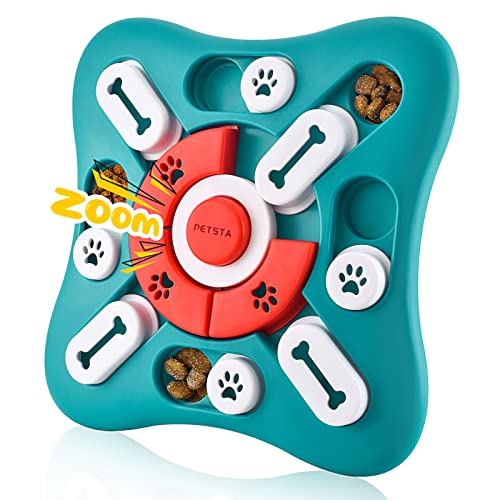
PETSTA’s thinking toy combines a 10×10 inch footprint with a 1.3 inch depth to create a multi-sensory puzzle. The center squeak button attracts attention and signals dogs to begin the search. Three difficulty settings adapt to a dog’s growing skills, while the 16-hole treat dispenser design extends engagement and slow-feeding time—often beyond 20 minutes. The Spin & Slide and Seek & Hide concepts leverage scent, paw dexterity, and problem-solving to retrieve hidden rewards, providing a balanced mental workout for dogs of mixed breeds and even cats that enjoy puzzle play.
DR CATCH Dog Puzzle: IQ Training And Enrichment

DR CATCH presents a 9.44-inch square puzzle with a slim profile designed for cats, puppies, and small dogs. Its interactive sliding parts require dogs to manipulate compartments to reveal treats, delivering both mental stimulation and tension relief. The slow-feed aspect encourages controlled eating by extending the reward-seeking process. This toy emphasizes cognitive engagement through a straightforward yet challenging mechanism ideal for beginners or late-stage learners transitioning from simple to more complex puzzles.
BoYoYo Interactive Dog Puzzle: Quiet, Adjustable Challenge

BoYoYo offers a robust build with ABS and nylon, designed to withstand enthusiastic play and provide a long-lasting treat-dispensing experience. It features two adjustable switches to control reward quantity, extending the feeding time and increasing cognitive load. A spiral design adds a layer of difficulty, challenging dogs to think through the best path to dispense a reward. While durable for many breeds, it remains best used under supervision to ensure safe play and appropriate pacing of enrichment.
Yoboeew Dog Puzzle: Level-Based Treat Training For Smart Dogs

Yoboeew’s level-based design targets memory and problem-solving through multi-step play. Levels range from easier to more challenging, requiring dogs to learn sequential moves, move red round sliders, and operate center components to uncover treats. The larger overall size supports bigger dogs and those with longer noses. It’s positioned as a mental workout that discourages boredom while promoting a range of skills—from exploration to precise manipulation—within a single interactive toy.
Outward Hound Twister Treat Puzzle: Level 3 Advanced

The Twister Treat Puzzle from Outward Hound is a Level 3 advanced puzzle designed for smart dogs ready for a complex challenge. It requires completing a sequence of actions to access hidden treats, turning mental energy into structured play. The toy is particularly effective for reducing anxiety and redirecting destructive behaviors by offering sustained cognitive engagement, making it a strong match for dogs that have mastered simpler puzzles and crave deeper problem-solving tasks.
KADTC U.S. Brand & Design: Five Levels Of Challenge

KADTC brings a U.S.-made, all-in-one puzzle with five difficulty levels and six gameplay modes. This design supports progressive learning, guiding dogs from basic to professional-level cognitive tasks. The toy ships with an illustrated guide to help owners navigate different modes, ensuring both owner and dog can participate in age-appropriate challenges. It’s built from food-grade ABS to resist bites and scratches while remaining safe for dogs across sizes, making it suitable for households with varied breeds.
Outward Hound Dog Brick: Level 2 Intermediate

The Dog Brick offers a versatile Level 2 challenge, making it a practical choice for introducing puzzles to dogs with little to moderate experience. The design emphasizes mental stimulation to complement exercise, with a stated goal of reducing boredom and encouraging calmer behavior. The brick’s layouts promote problem-solving skills across several compartments, providing a reliable entry point for dogs new to thinking toys.
Buying Guide: Key Purchase Considerations And Comparisons
- Skill level and progression: Look for toys with multiple difficulty levels to grow with your dog. Beginner-to-advanced transitions help prevent frustration and maximize engagement.
- Durability and size: Consider your dog’s breed and chewing tendency. Durable materials like ABS and reinforced plastics suit stronger chewers, while size should match your dog’s snout length and overall body dimensions.
- Interest factors: Toys with scent or tactile variations (sliders, spinners, dispensers) hold attention longer. A squeak or hidden rewards can increase motivation without encouraging aggressive play.
- Supervision and safety: Many puzzle toys require supervision initially to ensure proper use and to prevent accidental chewing of non-edible parts. Start with level-appropriate challenges and observe how your dog handles problem-solving tasks.
- Meal and treat integration: If you’re using these toys to slow feeding, check the cap’s adjustability and treat density. Some designs fit larger meals, while others are better for small treats.
- Household fit: Consider noise level and placement. Quiet, low-noise models reduce disruption, especially in apartments. Non-slip bases help prevent tipping and keep the toy in place during play.
- Maintenance: Look for dishwasher-safe parts or easy hand-wash components to keep the toy hygienic between uses. Regular cleaning helps maintain scent appeal and longevity.
- Learning pace and routines: Integrate puzzle play into daily routines to establish expectations. Short, consistent sessions support better learning than infrequent, long bouts.
These toys collectively offer varied paths to cognitive enrichment, enabling owners to tailor a mental-stimulation plan to their dog’s personality and progression. When selecting, consider age, temperament, and prior exposure to puzzles. Beginning with level-appropriate toys helps prevent frustration and encourages a positive problem-solving experience. Over time, mixing different puzzle formats—sliders, spinners, and treat dispensers—keeps sessions fresh and rewards consistent.