Best Toys for Dogs to Play Alone: Self-Play Essentials
Dogs often crave mental and physical stimulation, even when humans aren’t nearby. The right solo-play toys can keep them engaged, reduce boredom, and promote healthy chewing and exercise. This guide highlights top self-play options that work well for dogs of various sizes and temperaments. From motion-activated balls to treat-dispensing puzzles, these picks encourage independent play, provide enrichment, and help tiresome days disappear with a wag. Explore five well-suited options and a practical buying guide to match your dog’s needs and your household setup.
| Product | Brand | Type | Key Benefit |
|---|---|---|---|
| BENTOPAL Motion-Activated Ball | BENTOPAL | Motion-Activated Ball With Rope | Unpredictable bouncing and squeaky play that activates on approach |
| seagi Interactive Ball | seagi | Motion-Activated Bouncing & Vibrating Toy | One-minute action with two motion modes for self-guided play |
| Qraxond Octopus | Qraxond | Automatic Jumping Dog Toy | Two bounce modes and motion-activated action on touch |
| Outward Hound Paw N’ Play | Outward Hound | Treat Puzzle Toy | Level 2 puzzle with slow-released treats for problem-solving |
| PETSTA Puzzle Toys | PETSTA | Treat-Dispensing Puzzle Toy | Three play modes with a 16-hole dispenser for extended feeding |
BENTOPAL Motion-Activated Ball

BENTOPAL’s motion-activated ball is designed to spark natural hunting instincts with unpredictable movement. The toy powers on automatically for five minutes each session, then enters a sleep mode, and it reactivates when the dog approaches and nudges it. A rope tether adds an interactive dragging element that travels with the ball, keeping dogs engaged as the toy rolls and bounces in random patterns. The device uses LED indicators to signal different modes, including slow, fast, and interactive states. Note that this option is not intended for large dogs due to size and power considerations.
Play is enhanced by the squeaky mouse sound that accompanies each motion, encouraging chasing and pouncing without direct human input. Users can force a preferred mode by a long press to power on, and a double-press can turn the chirping off. Color cycling (blue, purple, yellow) helps owners quickly identify current mode. For households needing simple, self-contained entertainment, this toy delivers reliable, autonomous activity that can help alleviate boredom and keep dogs moving throughout the day.
seagi Interactive Ball

seagi’s interactive ball is built from premium natural rubber that’s tough, eco-friendly, and gentle on teeth. It’s BPA-free, making it safe for daily play. The toy activates with a touch and runs for about one minute before automatically stopping, preventing overstimulation. A second touch restarts the action, enabling safe, self-guided play. There are two motion modes—vibrating and rolling—with each mode offering unpredictable motion that mimics prey, providing both physical exercise and mental stimulation without requiring constant supervision.
This design suits a wide range of dogs, including those that lean toward moderate chewing and moderate energy levels. The self-contained nature of the motion modes makes it easier to control during off-leash sessions or while you’re busy with other tasks. The simple two-mode operation appeals to owners who want a straightforward, engaging toy that still challenges their dog’s problem-solving skills during solitary play.
Qraxond Octopus
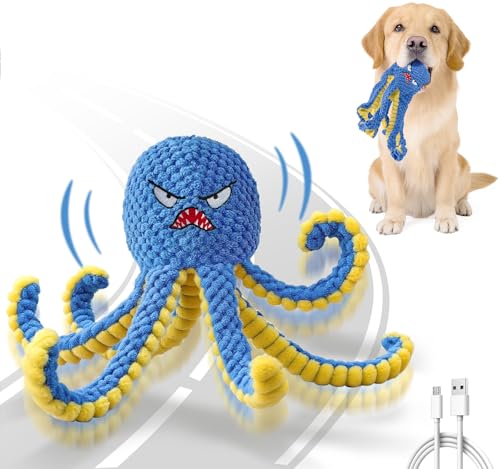
The Qraxond Octopus is designed to entertain dogs with motion-activated jumping and two distinct modes. Normal Bouncing Mode (blue light, two beeps) cycles on for ten seconds, rests for five, and repeats for a total of two minutes, resuming after touch detection. Crazy Bouncing Mode (red light, one beep) follows the same timing but delivers more enthusiastic bouncing. The device can be opened by tearing away Velcro from the fur cover to access the switch, offering quick battery swaps or mode changes without fully disassembling the toy.
Ideal for smaller to medium dogs and light chewers, the Octopus works well on various surfaces—from hard floors to thin carpets and even outdoor lawns. It’s designed for intermittent play, with motion-activation helping to prevent overstimulation. While it adds a playful challenge, it’s best used with supervision for safety and to monitor wear on the cover and internal components.
QGI Interactive Dog Toys

The QGI interactive dog toy offers irregular rolling with a rope, improving engagement and interaction across multiple play styles. It uses upgraded chew-resistant materials designed for longer-lasting play, making it suitable for most dogs who aren’t aggressive chewers. The toy features two speed settings—fast for energetic dogs and slow for smaller or more cautious pups—giving owners a simple way to tailor challenges to their dog’s comfort level. The unpredictable motion and rope attachment help sustain interest and encourage steady physical activity even when humans aren’t present.
Designed for solo play, this toy balances durability and engagement. It is versatile enough to be used on hard floors, thin carpets, or outdoor lawns, expanding where dogs can enjoy their exercise and mental stimulation. While not intended for aggressive chewers, it provides a reliable, interactive distraction that can help ease anxiety and reduce boredom during independent play sessions.
PETSTA Puzzle Toys
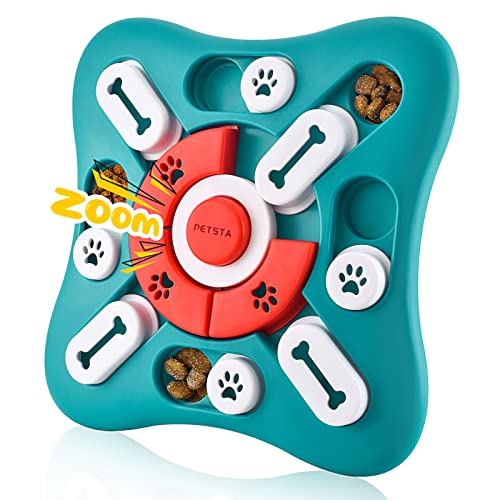
PETSTA’s dog puzzle toys combine a 10×10-inch footprint with three distinct play styles and a 16-hole treat dispenser. The toy includes a central squeak button to capture your dog’s attention and encourage interaction. The design supports slow feeding and extended play by challenging dogs with a circular orbit and linear sliding paths to locate the hidden treats. It’s marketed for both dogs and cats, emphasizing cross-species enrichment while providing a quieter rolling experience due to rubber components designed to reduce noise. It’s ideal for intelligent dogs who need ongoing mental challenges during solo play.
As a multi-pattern puzzle, PETSTA’s design fosters problem-solving and patience. The treat-dispensing feature rewards persistent exploration, reinforcing positive behaviors as dogs learn how to manipulate sliders and navigate mazes. Owners should supervise initial play to ensure the dog understands the mechanics and safety. This toy is particularly well-suited for dogs who benefit from structured, slow-release rewards, making independent play both rewarding and mentally stimulating without requiring constant human input.
Buying Guide: Key Purchase Considerations for Solo Play
- Dog size, chewing style, and energy level: Choose motion-activated toys for high-energy dogs who need constant motion, and puzzle-based toys for dogs who enjoy thinking through problems at their own pace. For aggressive chewers, prioritize tougher materials and supervise initial use.
- Durability and materials: Look for chew-resistant rubber, sturdy plastics, and reinforced seams. Non-toxic, BPA-free materials are important for daily use and dental safety.
- Motion vs. puzzle focus: Motion-activated toys excel at runtime engagement and exercise, while puzzle toys promote cognitive enrichment and longer play sessions. A mix can cover both needs.
- Noise and maintenance: Some toys include squeakers or electronic components that may wear over time. Consider how easy the toy is to clean and whether it requires battery replacements or charging.
- Surface compatibility: Ensure the toy performs well on your home’s typical floor type (hardwood, tile, carpet, or outdoors) to maximize bounce behavior and reduce noise.
- Safety and supervision: Start with supervised sessions to confirm your dog understands how to interact with the toy. Remove damaged toys immediately, and inspect for wear after each use.
- Reward structure: Puzzle toys with treat dispensers encourage problem-solving; consider how easily you can refill or pause the game if your dog completes the task too quickly.
- Maintenance routine: Regular cleaning prevents odor buildup and traps from accumulating. Remove batteries or recharge as needed, and store toys properly between uses.
- Budget and value: Durable, multi-feature toys may carry higher upfront costs but can offer longer lifespan and richer enrichment over time.
In summary, choosing the right solo-play toy depends on your dog’s personality, your household setup, and how you want to balance physical activity with mental challenges. Motion-activated balls deliver quick bursts of movement and fun, while puzzle toys provide longer, think-driven play that sharpens problem-solving skills. By combining a motion-focused toy with a treat-dispensing or puzzle option, you can create a varied solo-play routine that keeps your dog engaged throughout the day.