Best Outdoor Cat Houses for Winter Warmth and Protection
Answering the demand for durable, weatherproof shelters, these top outdoor cat houses are designed to keep feral, stray, and outdoor pets warm and dry. The best choices balance insulation, waterproofing, and easy setup. Ideal buyers include community cat feeders, barn owners, and porch or patio caretakers seeking a reliable winter refuge for their feline visitors.
| Product | Brand | Best For | Key Benefit |
|---|---|---|---|
| Outdoor Cat House Weatherproof & Insulated for Winter | TailTastic | Feral/Outdoor Cats | Seamless bottom for superior waterproofing |
| Deluxe Heated Cat House for Winter | PETYELLA | Outdoor & Indoor Use | Energy-efficient heating pad and dual doors |
| GULAIMOAO Outdoor Cat House Weatherproof | GULAIMOAO | Domestic Outdoor/Indoor Cats | Resin, easy to clean, flat top for storage |
| Solvify Outdoor Cat House for Feral Cats | Solvify | Feral/Stray Cats | 3-layer weatherproof with elevated base |
| K&H Self-Warming Cat Bed Pad | K&H Pet Products | Indoor/Outdoor Use | Self-heating without electricity |
Outdoor Cat House Weatherproof & Insulated for Winter – TailTastic

The TailTastic model features an upgraded seamless bottom to block ground moisture and rain. It uses high-density, water-resistant Oxford fabric with an insulated inner layer for all-weather warmth. This design shields feral or outdoor cats during winter winds and wet surfaces. The setup requires no tools and uses velcro fasteners for secure assembly. Best for cat caretakers who want a quick, dry shelter that travels between porches, garages, or barns.
Who it’s best for: community cat caregivers and families needing a reliable, dry, insulated shelter. Why selected: the seamless bottom provides stronger waterproofing than stitched floors, reducing moisture near a sleeping cat. Limitation: no built-in heating pad, so in extremely cold climates you may pair with a separate heat source.
Deluxe Heated Cat House for Winter – PETYELLA

This model emphasizes private warmth with an energy-efficient heating pad and dual doors for airflow. The exterior is weatherproof, with an insulated roof and walls to minimize drafts. It suits outdoor and porch settings, as well as indoor use in garages or barns. The dual doors can be used with flaps for added warmth in winter or removed for all-season comfort. Best for: owners seeking a ready-to-use heated shelter with good air flow control. Limitation: heating pad requires power access, which may limit placement.
GULAIMOAO Outdoor Cat House Weatherproof
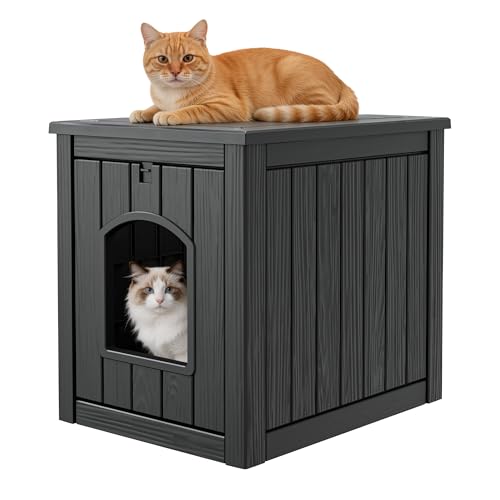
GULAIMOAO offers a resin cat house designed for outdoor and indoor use, with scratch and fade resistance and moisture protection. It has a flat top ideal for storing small items and provides a neutral, easy-to-clean exterior. Best for: owners who want a low-maintenance shelter with a modern look. Limitation: resin construction may be less breathable than fabric-based designs in warmer climates.
Solvify Outdoor Cat House for Feral Cats

Solvify delivers a 3-layer weatherproof shelter with a 6-leg elevated base to keep bedding dry. Its interior is spacious enough for 2–3 cats or small dogs, with oversized dual doors for easy entry and an accessible low-step threshold for injured or elderly animals. Best for: multi-cat households or caretakers needing a larger, weatherproof refuge. Limitation: larger size may be less portable for frequent relocations.
K&H PET PRODUCTS Self-Warming Cat Bed Pad

This pad uses self-heating material to radiate warmth without electricity. It is versatile and reversible, fitting on furniture, crates, or cat houses. Best for: indoor environments or as a supplemental warm layer inside a shelter. Limitation: does not provide standalone shelter insulation; must be combined with a weatherproof house for outdoor use.
Buying Guide: Key Considerations For Outdoor Cat Shelters
- Weatherproofing: Look for seamless bottoms and waterproof fabrics to minimize moisture exposure and preserve warmth.
- Insulation: Prefer insulated walls or linings to maintain body heat in cold weather.
- Ventilation: Ensure airflow to prevent humidity buildup while keeping drafts minimal.
- Size and accessibility: Choose a shelter large enough for the cat but not so big it loses heat; consider dual doors or flaps for warmth and easy entry.
- Elevated base: Shelters with legs or raised platforms reduce ground moisture and improve dryness.
- Portability: If placement changes frequently, favor tool-free assembly and lightweight designs.
- Heating options: For extreme climates, evaluate built-in heating pads or compatible warm accessories; verify power sources and safety features.
- Maintenance: Prefer materials that are easy to clean and resistant to fading, cracking, or mold.
Frequently Asked Questions
- What features matter most for outdoor cat shelters?
Best choices prioritize waterproofing, insulation, and easy assembly. Look for seamless floors, elevated bases, and dual-doors for airflow. - Is a heated shelter necessary in cold climates?
Heating helps in severe temperatures, but ensure safe power options and weatherproof placement. Use in combination with insulated covers for best results. - Can these shelters be used indoors?
Yes, many are suitable for porches, garages, or barns, and some models combine with indoor pads for extra warmth. - How do I clean outdoor cat houses?
Choose designs with smooth surfaces and wipe-clean interiors; avoid porous materials that harbor odors and moisture. - What is the best shelter for multiple cats?
Larger shelters with ample interior space and dual doors support multiple occupants and easier escape routes. - Are there health considerations when using outdoor shelters?
Regular insulation checks, dry bedding, and clean surfaces help prevent fleas, mold, and respiratory issues.